Select your language

Researchers investigate techniques to convert waste heat into energy

calor residual

International. Researchers at the University of Tokyo have generated electricity from latent heat, the energy created when a substance transitions from solid, liquid or gaseous to another state. This achievement will boost the possibilities of thermocells, devices that use temperature changes to generate electricity, which is known as thermoelectric conversion.

As all materials can undergo phase transitions under the right circumstances, this research supports the idea that a wide variety of materials have potential to be used for thermoelectric conversion. Latent heat that was once wasted could be used to allow devices to create their own energy while cooling, reducing reliance on other energy sources.

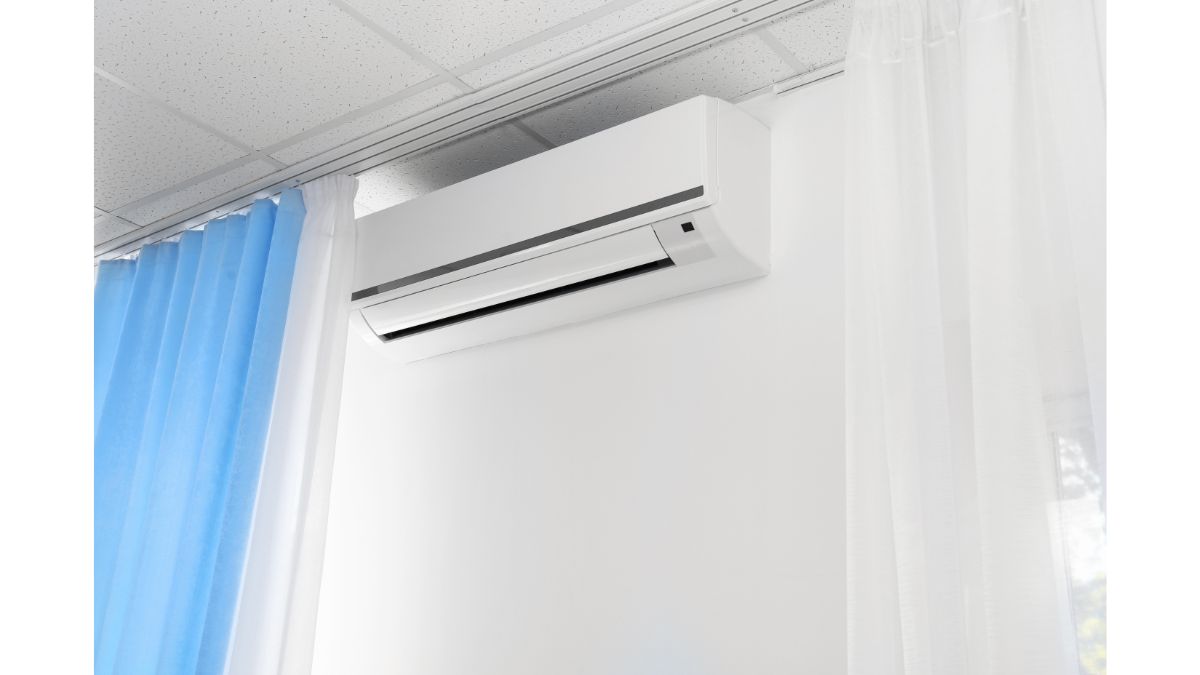
Researchers at the University of Tokyo were interested in the potential of latent heat energy that is created when the phase of a substance passes from one state to another, for example, when the water inside an air conditioner evaporates and condenses to create the cooling effect. Unlike the hot air you feel shooting out of an air conditioning unit, the latent heat created by the water inside is almost imperceptible. Thermoelectric conversion uses heat to generate electricity and one device that can do this is the thermocell.

The team created their own thermocell using a hydrogel (a water-rich polymeric material) called PNIPAM, which they modified with a compound called viologen. This modified hydrogel contained a thermosensitive polymer, meaning that the polymer reacted to temperature change, being in this case soluble in cold water but insoluble in hot water. With this thermocell, they were able to successfully use the very small amount of latent heat energy generated by the phase transition (between soluble and insoluble) to create electricity.

- Publicidad -

"For the first time, we have confirmed that latent heat has the potential to be used for thermoelectric conversion," said Professor Teppei Yamada of the Department of Chemistry at the University of Tokyo's Graduate School of Science. "We believe we can use various types of materials for thermocells. Any substance in the world can make a phase transition under the right conditions: for example, cream turns into ice cream, sand into glass, water into steam, etc. With this method, in principle, it is possible to extract electrical energy from even the slightest temperature difference, which greatly increases the number of situations in which thermoelectric conversion can be used."
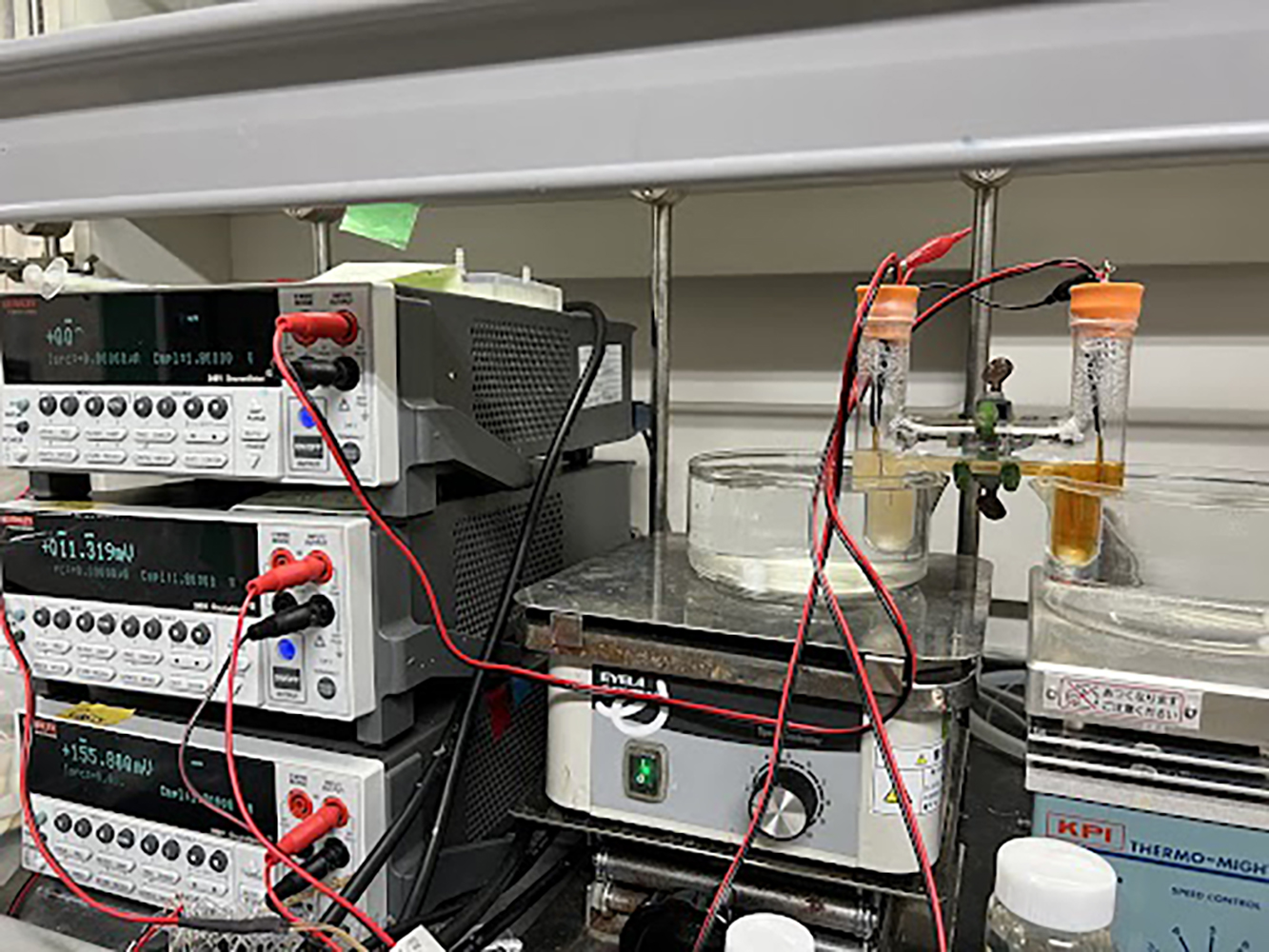
Experimental configuration of thermocells. Electrochemical cooling is currently not widely used or marketed due to its poor performance compared to other options, such as electric cooling. However, this research may change that.2023 Yamada. ©

The performance of a thermocell is evaluated based on the amount of voltage that can be generated from a small temperature difference, which is called the Seebeck coefficient. The higher the Seebeck coefficient, the more electrical energy can be extracted. The Seebeck coefficient of thermocells using organic compounds is usually less than 1 microvolt (one millionth of a volt) per kelvin unit of temperature, but in this test they exceeded 2 microvolts per kelvin. "This is a remarkable achievement," Yamada said. "Although we have previously created thermocells that produce 2 microvolts per kelvin through a pH change, this is the first time that the energy of a phase transition has been used directly."

The researchers hope this work will help improve refrigeration technology, temperature control devices and other technologies such as temperature sensors. "We have already reached the stage where we can consider practical applications of thermocells. For example, we hope that it will be possible to generate electricity while cooling a server room or a car engine," Yamada said. "The real challenge now is that this technology is not well known, so we need industry, government and academia to work together to achieve rapid societal implementation."


Duván Chaverra Agudelo
Duván Chaverra AgudeloEmail: [email protected]
Editor Jefe
Jefe Editorial en Latin Press, Inc,. Comunicador Social y Periodista con experiencia de más de 12 años en medios de comunicación. Apasionado por la tecnología. Director Académico del Congreso RefriAméricas.

No comments

• If you're already registered, please log in first. Your email will not be published.

Leave your comment

In reply to Some User
RefriAméricas 2026 will bring together international experts to drive the transformation of the HVAC/R sector

RefriAméricas 2026 will bring together international experts to drive the transformation of the HVAC/R sector

Miami. Energy efficiency, decarbonization, and technological transformation will be the focus of the academic program of RefriAméricas 2026, an event that will take place on July 29 and 30 at the...

Indoor air quality gains prominence as a challenge for health and building management

Indoor air quality gains prominence as a challenge for health and building management

Mexico. Indoor air quality is consolidated as one of the most important challenges for public health and the operation of buildings, in a context where people spend up to 90% of their time in closed...

CLIVET strengthens its presence in Panama with the help of ENPRO360 and TECNA

CLIVET strengthens its presence in Panama with the help of ENPRO360 and TECNA

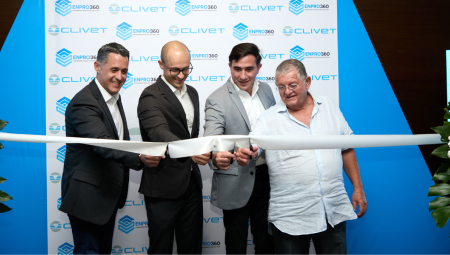
Panama. ENPRO360 official presentation of the CLIVET brand was held in Panama at a meeting that brought together installers, distributors, engineers and strategic partners in the HVAC sector.

Trane Mexico Celebrates 35 Years Driving the Evolution of HVAC to Smart Infrastructure

Trane Mexico Celebrates 35 Years Driving the Evolution of HVAC to Smart Infrastructure

Mexico. The HVAC industry is undergoing a transformation driven by digitalisation, artificial intelligence, electrification and decarbonisation targets.

Retrofit solutions drive modernization of existing HVAC systems

Retrofit solutions drive modernization of existing HVAC systems

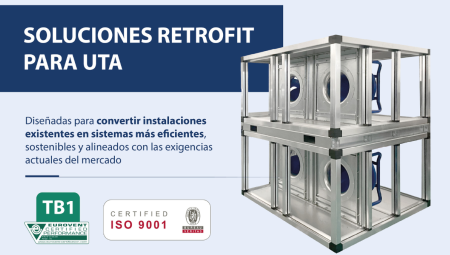
Spain. DECACLIMA presented a new proposal for retrofit solutions for the refurbishment of air handling units (AHUs), aimed at improving the energy efficiency, operational reliability and...

Thermal efficiency, key to more sustainable refrigerated logistics

Thermal efficiency, key to more sustainable refrigerated logistics

Mexico. Sustainability in refrigerated logistics does not depend solely on the incorporation of renewable energies or the reduction of emissions. Efficiency in temperature control is key to reducing...

Webinar: Heat Exchanger Optimization for HVAC and Data Center Cooling

Webinar: Heat Exchanger Optimization for HVAC and Data Center Cooling

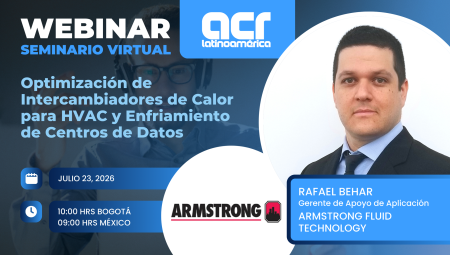
Topic: Optimizing Heat Exchangers for HVAC and Data Center Cooling By: Rafael Behar, Application Support Manager, Armstrong Fluid Technology Date: Thursday, July 23, 2026Time: 10.00H...

AHR Expo Mexico 2026 enters its countdown to Guadalajara

AHR Expo Mexico 2026 enters its countdown to Guadalajara

Mexico. More than 440 exhibitors and 13 thousand professionals from the HVACR sector will meet from September 29 to October 1 at Expo Guadalajara. Less than 100 days after its opening, AHR Expo...

Webinar: The new generation of Solstice low-GWP and ultra-low-GWP refrigerants

Webinar: The new generation of Solstice low-GWP and ultra-low-GWP refrigerants

Topic: The new generation of Solstice low-GWP and ultra-low-GWP refrigerants for the HVAC industry. By: Guillermo Brandenstein Ferreyra, Sr. Account Manager Stationary Refrigerants North Latam,...

Johnson Controls Highlights Five Women Engineers Driving Innovation in Latin America

Johnson Controls Highlights Five Women Engineers Driving Innovation in Latin America

Latin America. Johnson Controls recognized five Latin American female engineers for their contribution to the development of innovative and sustainable solutions in sectors such as HVACR,...

Free Subscription
Remember Me
SUBSCRIBE TO OUR NEWSLETTER
DO YOU NEED A SERVICE OR PRODUCT QUOTE?
LASTEST INTERVIEWS
SITE SPONSORS


LASTEST NEWSLETTER
Ultimo Info-Boletin