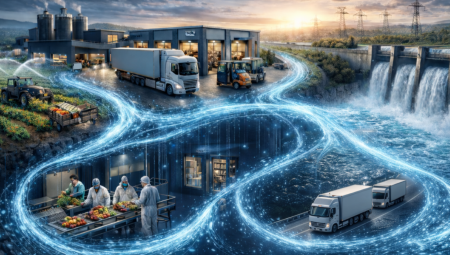


Mexico. Cold chain logistics faces new challenges in the face of the growing need to make more efficient use of natural resources. Beyond ensuring operational efficiency, refrigerated cargo transport companies are beginning to integrate energy efficiency and water consumption criteria, two variables that today redefine the sector's performance.
This change responds to an increasingly evident global pressure. According to the United Nations Environment Programme, if urgent action is not taken, by 2060 natural resource extraction could increase by 60% compared to 2020 levels, increasing biodiversity loss and water stress. In the case of Mexico, the outlook is especially relevant, since the country is among the countries with the highest water stress worldwide, according to the World Resources Institute.
In this context, cold logistics – considered a key link in the supply chain – is beginning to rethink the impact of its operations on both energy and water consumption, even when the latter is not always visible in the processes.
Water consumption gains relevance in cold logistics
Although the cold chain has not traditionally been identified as an industry intensive in direct water consumption, this perception is changing as logistics operators adopt a more comprehensive view of the environmental impact of their activities.
While energy efficiency has taken center stage in logistics optimization thanks to more advanced refrigeration technologies, improvements in temperature control units and better operational planning, water efficiency has not had the same level of integration.
"Unlike energy consumption, which is measurable and visible in almost all systems, water consumption in the cold chain is usually diluted in secondary processes, such as equipment maintenance, cleaning of units and thermal management, therefore, it has remained off the operating radar," said José Carlos Gómez, director of LAR North Sales at Thermo King.
The specialist added that "refrigerated transport depends on dynamics that, directly or indirectly, have a considerable water impact. From the manufacture and cooling of components to thermal dissipation in certain systems, water is part of the operational cycle, even if it is not always measured as such."
Opportunities to reduce the water footprint
Faced with growing water stress and the new demands of customers and global chains, more and more refrigerated transport companies are beginning to review operating practices that for years were considered standard.
According to Thermo King, there are several opportunities to optimize the use of water in the cold chain:
- Technological transition towards greater efficiency: the adoption of more efficient cooling systems allows for a reduction in the thermal load and a reduction in indirect water-intensive processes.
- Advanced insulation technologies, units with better performance and the use of alternative energies contribute to reducing the water footprint associated with the operation.
- Innovation in materials and components: new materials, lubricants and components help to extend maintenance cycles and reduce interventions that involve water consumption. Likewise, decisions such as consolidating load or minimizing door openings generate cumulative improvements in energy and water efficiency.
- Digitalization and real-time monitoring: Smart systems allow for more precise adjustment of temperature and humidity inside refrigeration units, avoiding unnecessary overcooling and cycling, which indirectly reduces water consumption.
- Operational optimization: better logistics planning, more efficient routes and shorter waiting time for units in operation reduce effective cooling hours and, with it, energy consumption and water footprint.
- Efficient maintenance and new cleaning practices: well-calibrated equipment in optimal condition operates with greater efficiency. In addition, dry cleaning technologies and recirculation systems reduce direct water consumption.
- Articulation with the cold chain: refrigerated transport can also influence "upstream and downstream" practices, promoting water efficiency standards in distribution centers, warehouses and production processes.
- For the logistics sector, the challenge is no longer only to maintain thermal control of perishable products, but to move towards operating models where energy efficiency, water management and sustainability are part of the same strategy.
In an environment where the availability of natural resources will be increasingly decisive, integrating water efficiency criteria could become a key factor in ensuring the competitiveness and operational performance of the cold chain.