

International. The company presented its 2026 Sustainability Report, in which it outlines advances in decarbonization, energy efficiency, and performance in critical environments such as hospitals, advanced manufacturing, higher education, and data centers.
Among the main results reported, the company noted that its technologies helped customers around the world save more than $9.5 billion in energy and operating costs, in addition to avoiding emissions equivalent to those generated by nearly six million homes in the United States. According to the company, these freed-up resources can be used for strategic priorities such as capacity expansion, innovation, and workforce strengthening.
The report also highlights progress on the company's internal sustainability goals, including a 46% reduction in Scope 1 and 2 emissions since 2017, as well as a 33% decrease in Scope 3 emissions from the use of products sold. Johnson Controls also indicated that 91% of its global electricity needs are already covered or offset with carbon-free energy.
"Our purpose is based on the belief that what we do matters for human society. In the critical environments we serve, performance, reliability and sustainability are critical for the future," said Joakim Weidemanis, CEO of Johnson Controls. "The 2026 Sustainability Report shows that, in industries where failure is not an option, we put energy efficiency to work to unlock growth opportunities and enable maximum performance, freeing up capital for long-term growth in the places that really matter," he added.
Application cases in hospitals and district heating
Among the projects highlighted in the report, the company mentioned the modernization of Children's of Alabama Children's Hospital, where the implementation of modernized chillers and heat pumps reduced heating oil needs by 69% and generated annual energy savings of $700,000. By incorporating the OpenBlue digital platform, enabled with artificial intelligence, savings increased to about 900 thousand dollars per year.
In Germany, specifically in Stuttgart Münster, large-scale heat pumps now supply climate-neutral heating to 10,000 homes, reducing more than 15,000 metric tons of CO₂e per year, equivalent to taking approximately 3,100 vehicles off the road.
"With energy prices on the rise, the most visionary companies are treating energy efficiency as a business strategy to direct every dollar toward innovation, technology adoption and competitive advantage," said Katie McGinty. "Energy efficiency is one of the fastest ways to reduce operating expenses, decrease emissions and improve performance at the same time. At Johnson Controls, we are proud to help our customers turn decarbonization into a source of financial strength and competitive advantage," he added.
Innovation and development of new technologies
Johnson Controls reported that during 2025 it allocated 77% of investment in research and development of new products to sustainability and climate innovation. Among the aforementioned developments are heat pumps capable of reducing emissions by up to 55% compared to conventional heating systems and reducing operating costs by 35%.
The report also highlights the expansion of electrification solutions and advanced heat pumps, which can generate electrical savings of up to 80% in critical operations.
In terms of specific technologies, the company highlighted the chillers and heat pumps of the YORK line, including the modular air-to-water system YORK YMAE, designed for electrification processes and boiler replacement in medical, commercial and district energy applications; as well as the YORK YMC² centrifugal cooler with magnetic bearings, capable of exceeding the efficiency requirements established by ASHRAE 90.1 by up to 40%.
Data Centers and AI-Driven Energy Demand
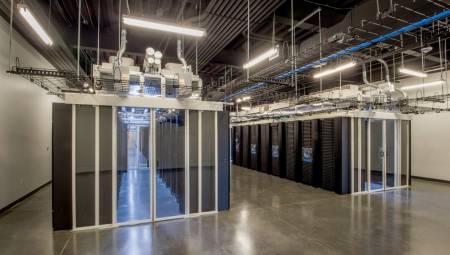
The report dedicates a special section to the growth of AI-powered data center infrastructure, where Johnson Controls says it is focused on improving the reliability, availability, and energy efficiency of these facilities.
According to the company, its solutions can reduce more than 50% of non-IT energy consumption in the main data center hubs in North America, through high-efficiency cooling technologies, thermal management, automation and security systems.
Featured solutions include the YORK YDAM chiller with magnetic bearings, the economized two-stage YORK YK-HT centrifugal chiller, the Silent-Aire Coolant Distribution Unit platform and the Metasys building automation system.
Johnson Controls also noted that its technologies allow waste heat from data centers to be reused through absorption chillers and heat pumps, turning these facilities into potential sources of energy for nearby buildings and district heating systems.