

The innovation that will shape the future of advanced HVAC and precision refrigeration is brewing in Pennsylvania. Johnson Controls opened the JADEC and ACE centers to HVAC designers in Latin America, showcasing how YORK integrates 150 years of experience with cutting-edge technology to respond to challenges such as data center growth and energy efficiency.
By: Víctor Alarcón.
The climate solutions sector stands on solid foundations built by industry giants. With Johnson Controls celebrating 140 years and its pioneering YORK brand celebrating 150 years, the combined vision of these two powerhouses adds up to nearly three centuries of business leadership. This vast legacy is not a mere historical note; it is the foundation that drives the most critical technological development of the 21st century: the precision cooling required by global data centers.
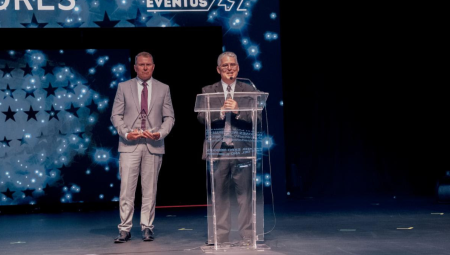
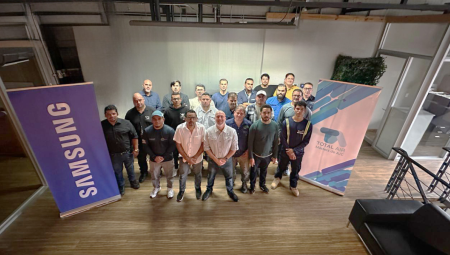
Recently, a select group of HVAC designers from Colombia, Costa Rica, and Peru had privileged access to two complementary pillars of Johnson Controls' innovation strategy in Pennsylvania: the Johnson Controls Advanced Engineering and Development Center (JADEC) and the Airside Center of Excellence (ACE).
Through the perspectives of Rob Tanner, Director of Marketing for Applied Equipment, and Austin Lehman, Product Manager for Applied Air Handlers, the delegation discovered how this synergy—from rigorous R+D to world-class manufacturing—is pushing YORK's applied HVAC equipment to the limit on a global scale.
JADEC: The Ultimate Stress Test for AI Infrastructure
JADEC is often described as the "ultimate stress test" for refrigeration technology.
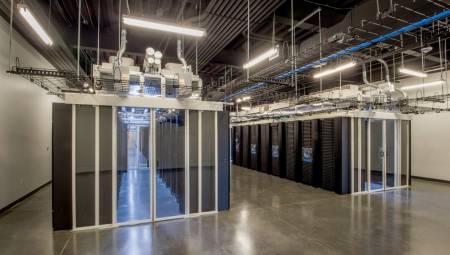
Spanning more than seven acres — the equivalent of five football fields — and housing more than 20 different labs, the center is designed to simulate all the potential climate, load, and application challenges that HVAC teams could face anywhere in the world. This massive investment, commissioned nearly eight years ago, is a living, essential facility that continually adapts its testing protocols.
Tanner emphasized that JADEC's enormous scale is a strategic necessity driven by the global imperative to manage resources sustainably and the exponential growth of Artificial Intelligence (AI).
"You can do a lot of initial design work in software, a lot of simulation work," Tanner explained, "but at some point, you need to determine if all of that translates to the real world. Does the chiller work as expected when connected to the rest of the system? Is it capable of operating efficiently over the entire operating range?"
The core mission is clear: to validate that HVAC equipment not only meets current regulatory requirements, but also operates accurately. This process ensures the reliability of the equipment and even considers the acoustics of the machinery, ensuring that the sound generated is "complementary to the design of the building" or not "obstructive" for the people working within the facility.
Tanner noted that the biggest change in his 36-year career has been the industry's transition from manual operation to leveraging machine learning and AI to make systems smarter and more accurate. This evolving intelligence allows teams to make better decisions based on weather, planned building usage, and the fluctuating cost of energy at any given time.
The Engine of Continuous Innovation: Doing More with Less
JADEC's success is demonstrated by its relentless pursuit of efficiency throughout the equipment lifecycle. Tanner explained that the guiding philosophy, "doing more with less," refers to the practical mission of delivering greater cooling capacity while simultaneously reducing the consumption of energy and critical natural resources.
Crucially, this goal also translates directly into long-term economic value for customers through reduced operating costs, dictating every step from initial design to end-of-life analysis.
"In a commercial building, an air handler and chiller can last 30 years," Tanner said. "But throughout that lifecycle, you still want to effectively manage how that equipment is aging... Have we made such progress that justifies replacing that component or that piece of equipment before we even reach the end of the life cycle?"
This long-term perspective means that JADEC's work constantly evaluates existing products. The facility doesn't just design new equipment; He assures that the products currently in the field "continue to be viable and good, and that they improve." This dedication allows Johnson Controls to decide whether to improve an existing component or start from "a blank slate" when facing new regulatory mandates.
Tanner proudly detailed one of JADEC's greatest achievements: working on decarbonization through electrification by testing the real-world performance of heat pump chillers. "We can reuse that low-grade thermal energy," he explained. "That low-energy source can be boosted by the refrigeration cycle and now used for another purpose in the building. Our overall energy use decreases. We are delivering more with less."

ACE: Airside Center of Excellence
The strategic intent behind JADEC's testing is fulfilled by the manufacturing power of the nearby Airside Center of Excellence (ACE) plant in York, Pennsylvania. This facility—a state-of-the-art, 325,000-square-foot manufacturing and support center—is dedicated to the production of YORK Air Handling Units (UMAs), including custom and mission-critical models.
Austin Lehman, Product Manager for Air Handlers, provided a unique and personal perspective on the plant's evolution, noting that he grew up in the area and began working at the factory before graduating as an engineer.
"We had a smaller, outdated plant in the center of the city," Lehman explained. "We moved here... and we doubled our manufacturing capabilities." The relocation allowed the company to streamline operations, consolidating the manufacturing of semi-custom units, fully customized units, and coils, into a single facility.
This move was vital for efficiency. The plant design intentionally placed the engineering, product management, and manufacturing teams in close proximity. Lehman emphasized that this setup makes it "much easier to incorporate new products" and ensures that what they design "can be manufactured efficiently" while maintaining high quality standards.
Synergy in motion: the JADEC-ACE feedback loop
The strategic alignment between innovation and production is not theoretical; it is achieved through constant and close coordination. The JADEC test facility and the ACE manufacturing plant operate in strict synchrony, ensuring a continuous feedback loop. Product Manager, Austin Lehman, confirmed that ACE engineers and JADEC staff work together in JADEC labs at least three times a month.
This frequent collaboration is essential to address new product additions, validate component performance (such as new fan suppliers), and ensure that the final manufacturing process accurately reflects the highly efficient and rigorous engineering standards tested through JADEC's advanced stress testing. This unified approach ensures that every YORK unit built in ACE has been optimized for real-world performance.
Manufacturing excellence and global reach
Lehman confirmed that the data center market is having a growing impact on the plant's output, noting that they are "definitely on the rise with the number of data center units that we have built at this factory." In addition, the ACE plant builds units for the U.S., Canada, and Latin America, and is trusted to manufacture specialized equipment for sensitive applications such as government facilities and U.S. embassies around the world.
The discussion also addressed the commitment to the quality of materials and product assurance. Lehman highlighted the use of superior materials, such as G90 steel, and detailed the company's industry-leading "zero penetration" roof warranty on certain units. To ensure material quality and performance, the plant relies on rigorous in-house testing and third-party external certification. Lehman noted that third-party vendors such as Intertek (ETL) and CSA conduct constant inspections and tests to verify that the bill of materials and performance reports match what is actually being built, offering customers complete confidence in the product.
Strategically, ACE's location, right in York, maintains the generations of engineering and manufacturing talent associated with the origins of the YORK brand 150 years ago.

Competitive Advantage: Thought Leadership
Tanner said that JADEC provides a great competitive advantage, but it's not just about having the best individual component.
"Competitive advantage is about leading the industry by example," he said. "We want to be part of that conversation in every possible setting... always looking forward, always 'designing the future' so that we continue to gain the highest level of trust and credibility."
This competitive advantage is enhanced by the synergy between the two facilities. JADEC performs the rigorous "why" and "what ifs," while the ACE plant focuses on the "how" of manufacturing at scale. This holistic view ensures that every YORK component is designed with the entire system in mind, resulting in optimal customer outcomes. The data center segment, despite not being the majority of the overall business, is the area of greatest opportunity where this mission to create sustainable infrastructure can be most effectively demonstrated.
The visit ensured that Colombian, Costa Rican and Peruvian designers were able to bring this depth of technical understanding back to their markets, helping them mitigate regional risks and correctly apply proven solutions. The future of refrigeration is being tested and built today at JADEC and ACE.
Rob Tanner
Rob Tanner, Director of Applied Equipment Marketing at Johnson Controls, has more than three decades of experience in HVAC. He says his diverse background, culminating in the current position as Director of Marketing for Applied Teams, underpins his work. He embodies the slogan, "We're not waiting for the future, we're engineering it," ensuring that YORK's applied HVAC solutions—proven at JADEC and produced at ACE—deliver performance that serves people and the planet.
Austin Lehman
Austin Lehman, Product Manager at the Airside Center of Excellence (ACE), represents the local technical expertise vital to the YORK brand. With a career that began in residential HVAC installation, he pursued an engineering career that led him to begin working at the ACE factory before graduating. This hands-on experience allows him to bridge the gap between engineering theory and manufacturing reality, ensuring that air handlers produced at ACE meet exacting quality and logistics standards while driving product innovation.
Voices from Latin America: The Impact of JADEC and ACE on Project Engineering
The visit to the Center for Advanced Development and Engineering (JADEC) and the ACE plant offered Latin American professionals a perspective that goes beyond any technical specification, providing the confidence needed to justify the investment in premium efficiency solutions.
Mario Mata Bonilla, Project Engineer at Qualified Ingenieros in Costa Rica, described the tour as very enriching on a personal and professional level as he had the opportunity to see first-hand the places where the equipment is created. "Being in person at the plant reinforces your confidence in the brand, knowing the quality control that is followed in the production chain. Although the technical data sheet guarantees compliance with standards and certifications, being in the plant reinforces that confidence," said Mata. Regarding the visit to the ACE plant, he stressed that the entire process itself, from the profiling and cutting of parts, making the most of the usefulness of the raw material and reducing waste as much as possible. Even the assembly of all the parts is key to durability.
From Colombia, Eng. Diego Leguizamo, Director of Engineering at HVAC Consulting, pointed out that the experience met and even exceeded his expectations. For him, the extreme weather simulation tests at JADEC were the most confident, "Seeing how the equipment is subjected to such demanding conditions – well above those they will normally face in operation – demonstrates York's commitment to the real reliability of its chillers." In terms of sustainability and the focus on heat pumps, Leguizamo stressed that "the electrification of water heating becomes a strategy consistent with current policies for sustainability and reduction of natural gas use" in his country. Finally, the visit changed his perspective on critical infrastructure: "We don't usually associate York with precision equipment for data centers, but this visit changed that perception for us. We discovered a robust and highly specialized line of solutions for critical infrastructure," he concluded.
Juan Gustavo Mahecha, CEO of JGM Ingenieros Consultores in Colombia, found the experience crucial to validate the rigor of the brand: "The experience was enriching to be able to validate first-hand the way JCI studies the thermodynamic behavior of the water chillers that will be produced in its plants worldwide." When talking about how to justify the long-term value to his customers, Mahecha was emphatic: "This greater value of the infrastructure is reflected in a reduction in maintenance costs, energy consumption and useful life of the equipment that not only in the long term but in the short term can optimize the return on investment." He also highlighted the importance of performance testing and took away a key message for his colleagues: that "equipment that has detailed and certified studies of behavior during operation should be recommended."
Finally, Camilo José Botero, Consulting Engineer at Camilo Botero Ingenieros Consultores SAS, said that the investment and level of technology for the simulation of performance, vibration/noise and extreme weather at JADEC is "really impressive". Regarding the concept of "doing more with less" through the use of heat pumps, he explained the main benefit: "When you combine this practice, hot water generation with cold water byproduct or vice versa, you use the same kilowatt for two simultaneous benefits." Botero emphasized that this factor is essential for financial justification, since "the operating costs of the facilities over time depend on it." In the context of Data Centers, he noted that the challenge is to be "able to concentrate large cold generation capacities in tight spaces without equipment affecting each other," making JADEC's rigorous testing "essential and reassuring to achieve this goal." Additionally, he was pleasantly surprised by the development of the YMAE modular chiller, which offers "versatility in the design, implementation and growth of projects that are carried out in stages."