
 We present a series of guidelines for the sustainable use of halogenated refrigerants in refrigeration and air conditioning systems.
by Omarly Acevedo*
Refrigeration and air conditioning represent the main areas where refrigerant substances are consumed, which, poorly managed, contribute negatively to the most serious environmental problems today: the deterioration of the ozone layer and global warming. Due to this it is necessary to establish management guidelines in the different stages during the life cycle of these substances and the equipment that possesses them (manufacture, distribution, use and final disposal), which if applied by all actors, will protect the environment and therefore survival on the planet.
Studies show that the emissions and energy used during the manufacture of air conditioning equipment is significantly smaller than the emissions and energy required during 50 years of operation.
It is estimated that the emissions resulting from the operation are between 100 and 200 times more than those resulting from the production and transport of the equipment. Taking into account the above, the information and guidelines given in this article will be related to the proper management of halogenated refrigerants (CFCs; HCFC, HFC and mixtures) and equipment containing them, used by end users during the use and final disposal stage.
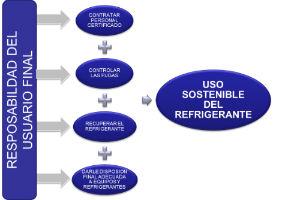
Guidelines for the sustainable use of halogenated refrigerants by end users: The recommendations described here aim to prevent the emission of refrigerants into the atmosphere, where they cause deterioration of the ozone layer and global warming.
Figure 1
Carry out inventory and registration of refrigeration and air conditioning equipment interventions.
In order to identify the type of equipment that an end user has and perform an adequate management of the refrigerants handled and the equipment, it is necessary to keep a record of all the refrigeration and air conditioning equipment and its interventions, which at least is recommended to have the following information:
- Equipment identification (see equipment plate data next to the compressor or on the side of the equipment): make, model, location, date of installation, installer data, type and quantity of refrigerant.
- Refrigerant additions: date, details of the maintenance technician (name and telephone number), amount of refrigerant added and reason.
- Amount of refrigerant recovered during maintenance, repair and final disposal and the final destination of that refrigerant (recycling, reuse, shipment to regeneration center, shipment for destruction).
- Leak test: date, data of the technician who performs the test, test results, corrective actions required and follow-up.
- Preventive maintenance record where you specify the company and / or technician that carried out the action.
- It is advisable to keep the records up to date.
It is advisable that those responsible for the equipment implement an adequate labeling of the same, where the type of refrigerant and the amount contained are identified. If a refrigerant change was made, it is necessary to specify the type, quantity and date of conversion on the label.
Hiring certified personnel for assembly, maintenance or repair of refrigeration or air conditioning equipment.
It is advisable to hire only certified personnel for the execution of the assembly, maintenance or repair of refrigeration and air conditioning equipment. In Colombia they have the certification in the NCL 280501022: Apply good practices in the use of refrigerants and lubricants in refrigeration and air conditioning (RC) facilities, according to environmental regulations. Verify in your country that it is current. Note that the certificate in most cases expires.
Important: If you own your own refrigeration and air conditioning system maintenance equipment, make sure that the people who are part of it, are certified in the corresponding standard and keep their certificate in force.
Prevention and control of refrigerant leaks
Refrigeration and air conditioning equipment with halogenated refrigerants, especially those used in commercial and industrial applications, should be subject to regular refrigerant leakage checks by certified personnel. A report of this test must be made, in the format of preventive maintenance, in which it must include date, data of the technician who performs it, method used, results, corrective actions required and follow-up.
Depending on the equipment, it is recommended to perform the leak test at least once a year, for this your technician may use one or more of the following procedures:
- Analysis of equipment operating parameters such as pressure, temperature, compressor current and recharge volumes.
- Use of gas detection devices, adapted to the refrigerant.
- Use of patented bubble or foam solutions.
- Application of ultraviolet sensing fluids or suitable dyes in the circuit (only with the prior authorization of the equipment manufacturer).
The leaks detected must be repaired as soon as possible, and before loading again, you must carry out a nitrogen tightness test and an adequate vacuum. Once the repair is finished, the records of the equipment will be updated with the appropriate information (date, data of the technician who performs it, method used, results, required corrective actions and follow-up). As far as possible, the cause of the leak should be determined to prevent it from recurring.
It is recommended to be aware of the waste of refrigerant by the maintenance personnel of the equipment, since it is possible that your equipment has a leak that has not been corrected.
Recovery, recycling and regeneration of refrigerants.
- Actions should be taken to ensure that in maintenance and overhaul operations, if necessary, the recovery of refrigerants is always carried out.
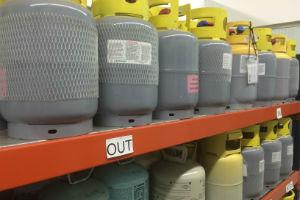
- Perform the recovery in special cylinders for this use, which are returnable and with characteristics suitable for this activity. Commercial or non-returnable cylinders should not be reused due to safety regulations.
- Do not mix refrigerants of different composition in the same cylinder, if this occurs, the substance can not be reused again, will be considered residual, and must be taken immediately to a special site for final disposal.
Final disposal of refrigerants and the equipment and/or containers containing them.
When refrigeration and air conditioning equipment has reached the end of its useful life, before disassembly, recycling or disposal, it is necessary to carry out the recovery of the refrigerant it has in recovery cylinders. Once recovered, the refrigerant and polyurethane foam foamed with CFC or HCFC, must be managed through an entity specialized in waste management, complying with the environmental regulations in force in your country.
For refrigerant containers, it is recommended to consult Guide Q, issued by the Institute of Refrigeration, Air Conditioning and Heating - AHRI - of the United States, on content recovery and appropriate recycling of refrigerant cylinders, which offers a procedure to recover the contents and subsequent recycling of cylinders.
For the management and integral management of refrigeration and air conditioning equipment at the end of the useful life, the provisions of current regulations on the integral management of Waste Electrical and Electronic Equipment in your country must be met.
* Omarly Acevedo, Mechanical Engineer, Consultant of the Ozone Technical Unit of the Ministry of Environment and Sustainable Development in Colombia in projects related to the elimination of substances that deteriorate the ozone layer and cause global warming. Evaluator of labor competencies for the refrigeration and air conditioning sector at SENA (National Learning Service). Professor and instructor of refrigeration and air conditioning. Speaker at events related to the area of refrigeration and air conditioning. ([email protected]).