Select your language

Supercomputer cooling method that saves millions of gallons of water

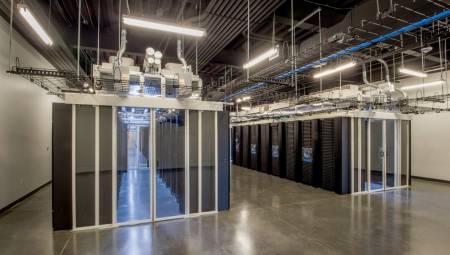
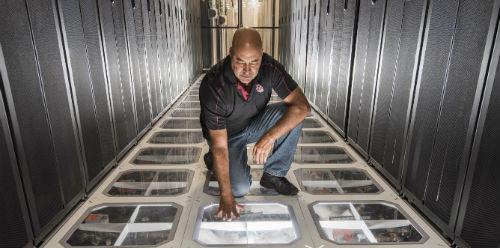
United States. In different parts of the country, people talk about graywater recycling and rainwater capture to minimize the millions of liters of water needed to cool large data centers. However, the simple answer in many climates, said researcher David J. Martinez of Sandia National Laboratories (Albuquerque), is the use of liquid coolant.

Based on this principle, Martinez – leader of Sandia's infrastructure computing services engineering project – is helping to design and monitor a cooling system to generate savings of 4 million to 5 million gallons a year in New Mexico if installed next year. At the Sandia computer center, and hundreds of millions of gallons nationwide, if the method is widely adopted. It's now being tested at the National Renewable Energy Laboratory in Colorado, which it hopes will save a million gallons a year.

The system, built by Johnson Controls and called the Hybrid Thermosiphon Refrigeration System, cools like a refrigerator without the need for energy expenditure and a compressor.

Today, many data centers use water to remove waste heat from servers. The heated water is channeled to cooling towers, where a separate stream of water turns into steam and evaporates into the atmosphere. The process removes heat from the water by pipe, which cools the installation again. But the replenishment of evaporated water is needed to continue the process. Therefore, more water will be needed around the world to evaporate heat from the growing number of data centers, which in turn are increasing in size as more users put the information in the cloud.

- Publicidad -

The prototype method uses a liquid coolant instead of water to take away the heat. The system works like this: Water heated by the computer center is pumped inside a closed system in the vicinity of another system containing coolant. The coolant absorbs heat from the water so that the water, now cooled, can circulate to cool again. Meanwhile, the heated refrigerant vaporizes and rises in its closed system for heat exchange with the atmosphere. As heat is removed from the coolant, it condenses and sinks to absorb more heat, and the cycle repeats.

In New Mexico, they would be produced in spring, fall and winter, saving millions of gallons of water.

In summer, the ambient temperature of the state is high enough that a cooling tower or some evaporation method can be used. But more efficient computing architectures can raise the temperature acceptable to the servers they operate and make occasional use of cooling towers less frequent.

Source: Sandia National Laboratories

Duván Chaverra Agudelo
Duván Chaverra AgudeloEmail: [email protected]
Editor Jefe
Jefe Editorial en Latin Press, Inc,. Comunicador Social y Periodista con experiencia de más de 12 años en medios de comunicación. Apasionado por la tecnología. Director Académico del Congreso RefriAméricas.

No comments

• If you're already registered, please log in first. Your email will not be published.

Leave your comment

In reply to Some User
RefriAméricas 2026 will focus its Academic Congress on efficiency, decarbonization and technological transformation in HVAC/R

RefriAméricas 2026 will focus its Academic Congress on efficiency, decarbonization and technological transformation in HVAC/R

United States. The RefriAméricas 2026 Academic Congress will have as its thematic axis the "Efficiency, decarbonization and technological transformation in HVAC/R", a proposal that seeks to respond...

Johnson Controls highlights the impact of energy efficiency in critical industries in its 2026 Sustainability Report

Johnson Controls highlights the impact of energy efficiency in critical industries in its 2026 Sustainability Report

International. The company presented its 2026 Sustainability Report, in which it outlines advances in decarbonization, energy efficiency, and performance in critical environments such as hospitals,...

Jeff Littleton Announces Retirement as Executive Vice President

Jeff Littleton Announces Retirement as Executive Vice President

United States. The organization announced the retirement of Jeff Littleton as executive vice president of the organization, a position he will leave at the beginning of 2027, after more than two...

AHR Expo Mexico 2025 was recognized as the Best Event of the Year at EVENTUS 29

AHR Expo Mexico 2025 was recognized as the Best Event of the Year at EVENTUS 29

Mexico. During the EVENTUS 29 gala, held as part of Cintermex's 35th anniversary, the 2025 edition of AHR Expo Mexico 2025 received recognition as the "Best Event of the Year", a distinction awarded...

Refrigerated transport opens up opportunities to reduce water consumption in the cold chain

Refrigerated transport opens up opportunities to reduce water consumption in the cold chain

Mexico. Cold chain logistics faces new challenges in the face of the growing need to make more efficient use of natural resources. Beyond ensuring operational efficiency, refrigerated cargo...

Technical Training Drives Strengthening HVAC Talent

Technical Training Drives Strengthening HVAC Talent

Costa Rica. Samsung and the Costa Rican company Total Air held the series of talks "Technical Training in Samsung – Total Air DVM S2 Systems", an initiative aimed at strengthening technical...

ASHRAE Highlights Industry Priorities in Technical Program for its 2026 Annual Conference

ASHRAE Highlights Industry Priorities in Technical Program for its 2026 Annual Conference

United States. ASHRAE unveiled the technical program for its 2026 Annual Conference, which will be held June 27-July 1 in Austin and will bring together professionals from the HVAC&R industry to...

The KNX standard is consolidated in Chile: experts demystify building automation with a view to a sustainable future

The KNX standard is consolidated in Chile: experts demystify building automation with a view to a sustainable future

Santiago, Chile. The smart construction sector in Chile took a relevant step with the holding of the Building Automation Days by KNX LATAM Virtual, Chile 2026, an informative and educational space...

The Invisible Power of Cold: Thermal Efficiency for Data Centers in the Age of Artificial Intelligence

The Invisible Power of Cold: Thermal Efficiency for Data Centers in the Age of Artificial Intelligence

International. Behind the digital cloud and artificial intelligence there is a complex, dense and constantly operating physical infrastructure. In this environment, the cold becomes an invisible...

Expo Frío Calor Chile 2026 successfully closes and consolidates its position in the HVAC/R industry

Expo Frío Calor Chile 2026 successfully closes and consolidates its position in the HVAC/R industry

Chile. With an agenda focused on innovation, sustainability and professional development, Expo Frío Calor Chile 2026 ended after three intense days held at Centro Parque, consolidating itself as the...

Free Subscription
Remember Me
SUBSCRIBE TO OUR NEWSLETTER
DO YOU NEED A SERVICE OR PRODUCT QUOTE?
LASTEST INTERVIEWS
SITE SPONSORS


LASTEST NEWSLETTER
Ultimo Info-Boletin