
Select your language

Efficient air conditioning gains prominence in the energy efficiency of buildings

International. Air conditioning has become one of the most determining factors in the energy performance of commercial and residential buildings. In a context of rising energy costs and more demanding environmental goals, the efficiency of heating, ventilation and air conditioning (HVAC) systems acquires a strategic role in the operation of buildings.

Globally, buildings account for a significant part of energy consumption. According to a report by the International Energy Agency, this sector consumes around 30% of the world's energy and generates 26% of energy-related emissions, which places it at the center of efficiency and decarbonization strategies.

Within that consumption, HVAC systems represent one of the components with the greatest impact. Research by the U.S. Department of Energy indicates that these systems account for about 35% of total energy consumption in buildings, the largest proportion attributable to an end use.

"When the long-term results are analyzed, it is clear that energy savings in buildings require efficient air conditioning," explains Enrique Tello, general manager of Trane Mexico. "It is not just about renewing equipment, but about integrating HVAC systems that are conceived from the design, are correctly managed in the operation and are continuously monitored to respond to the real use of the spaces."

- Publicidad -

Efficient buildings, more sustainable cities

In addition to its direct impact on operating costs, the energy performance of buildings also has a growing weight in the climate and urban agenda. In the development of smart cities, energy efficiency in HVAC systems has become a key criterion for creating more sustainable and livable spaces.

In Mexico, the challenge is particularly relevant. The National Commission for the Efficient Use of Energy warns that, without immediate action, emissions from commercial and residential buildings could multiply up to 6.7 times by 2050.

Against this backdrop, the modernization of HVAC systems, thermal electrification, and the adoption of data-driven energy management platforms are emerging as some of the most direct measures to reduce the operational carbon footprint of cities.

Technological advances have made it possible to develop air conditioning solutions capable of reducing energy consumption while improving comfort and operating conditions in buildings. Key benefits of modern HVAC systems include:

  • Significant reduction in energy consumption, thanks to high-performance equipment and intelligent controls that adjust the operation to the real conditions of the building.
  • Data-driven energy management, using digital platforms and sensors that allow performance to be monitored in real time and inefficiencies to be identified.
  • Automatic adaptation to the use of the building, with systems that adjust the air conditioning according to occupancy, schedules and weather conditions.
  • Improvement of indoor air quality, through integrated ventilation, filtration and humidity control solutions.
  • Promotion of operational decarbonisation, through thermal electrification and the replacement of fossil fuel-based equipment.
  • Greater operational stability and asset life, by reducing unforeseen failures and optimizing maintenance.

In the residential and smaller-scale projects, ductless HVAC systems have gained relevance as an efficient and flexible alternative. By eliminating the energy losses associated with traditional ductwork, they allow air to be directed directly into conditioned spaces, improving thermal control and reducing energy consumption.

Air conditioning as a lever for sustainability

- Publicidad -

In both commercial buildings and homes, the challenge is similar: maintaining comfortable and healthy spaces while controlling energy consumption. In this context, efficient air conditioning has established itself as one of the main tools to move towards more sustainable operating models.

"Air conditioning is one of the points where the interests of people, organizations and the planet intersect. Investing in efficient HVAC systems that contribute to energy savings in buildings is a concrete way to ensure more viable, comfortable and sustainable infrastructures in the long term," concludes Enrique Tello.


No comments

• If you're already registered, please log in first. Your email will not be published.

Leave your comment

In reply to Some User
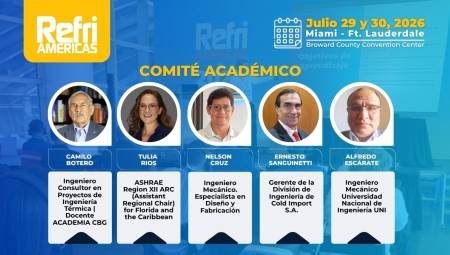
RefriAméricas 2026 will focus its Academic Congress on efficiency, decarbonization and technological transformation in HVAC/R

RefriAméricas 2026 will focus its Academic Congress on efficiency, decarbonization and technological transformation in HVAC/R

United States. The RefriAméricas 2026 Academic Congress will have as its thematic axis the "Efficiency, decarbonization and technological transformation in HVAC/R", a proposal that seeks to respond...

Johnson Controls highlights the impact of energy efficiency in critical industries in its 2026 Sustainability Report

Johnson Controls highlights the impact of energy efficiency in critical industries in its 2026 Sustainability Report

International. The company presented its 2026 Sustainability Report, in which it outlines advances in decarbonization, energy efficiency, and performance in critical environments such as hospitals,...

Jeff Littleton Announces Retirement as Executive Vice President

Jeff Littleton Announces Retirement as Executive Vice President

United States. The organization announced the retirement of Jeff Littleton as executive vice president of the organization, a position he will leave at the beginning of 2027, after more than two...

AHR Expo Mexico 2025 was recognized as the Best Event of the Year at EVENTUS 29

AHR Expo Mexico 2025 was recognized as the Best Event of the Year at EVENTUS 29

Mexico. During the EVENTUS 29 gala, held as part of Cintermex's 35th anniversary, the 2025 edition of AHR Expo Mexico 2025 received recognition as the "Best Event of the Year", a distinction awarded...

Refrigerated transport opens up opportunities to reduce water consumption in the cold chain

Refrigerated transport opens up opportunities to reduce water consumption in the cold chain

Mexico. Cold chain logistics faces new challenges in the face of the growing need to make more efficient use of natural resources. Beyond ensuring operational efficiency, refrigerated cargo...

Technical Training Drives Strengthening HVAC Talent

Technical Training Drives Strengthening HVAC Talent

Costa Rica. Samsung and the Costa Rican company Total Air held the series of talks "Technical Training in Samsung – Total Air DVM S2 Systems", an initiative aimed at strengthening technical...

ASHRAE Highlights Industry Priorities in Technical Program for its 2026 Annual Conference

ASHRAE Highlights Industry Priorities in Technical Program for its 2026 Annual Conference

United States. ASHRAE unveiled the technical program for its 2026 Annual Conference, which will be held June 27-July 1 in Austin and will bring together professionals from the HVAC&R industry to...

The KNX standard is consolidated in Chile: experts demystify building automation with a view to a sustainable future

The KNX standard is consolidated in Chile: experts demystify building automation with a view to a sustainable future

Santiago, Chile. The smart construction sector in Chile took a relevant step with the holding of the Building Automation Days by KNX LATAM Virtual, Chile 2026, an informative and educational space...

The Invisible Power of Cold: Thermal Efficiency for Data Centers in the Age of Artificial Intelligence

The Invisible Power of Cold: Thermal Efficiency for Data Centers in the Age of Artificial Intelligence

International. Behind the digital cloud and artificial intelligence there is a complex, dense and constantly operating physical infrastructure. In this environment, the cold becomes an invisible...

Expo Frío Calor Chile 2026 successfully closes and consolidates its position in the HVAC/R industry

Expo Frío Calor Chile 2026 successfully closes and consolidates its position in the HVAC/R industry

Chile. With an agenda focused on innovation, sustainability and professional development, Expo Frío Calor Chile 2026 ended after three intense days held at Centro Parque, consolidating itself as the...

Free Subscription
Remember Me
SUBSCRIBE TO OUR NEWSLETTER
DO YOU NEED A SERVICE OR PRODUCT QUOTE?
LASTEST INTERVIEWS
SITE SPONSORS


LASTEST NEWSLETTER
Ultimo Info-Boletin