
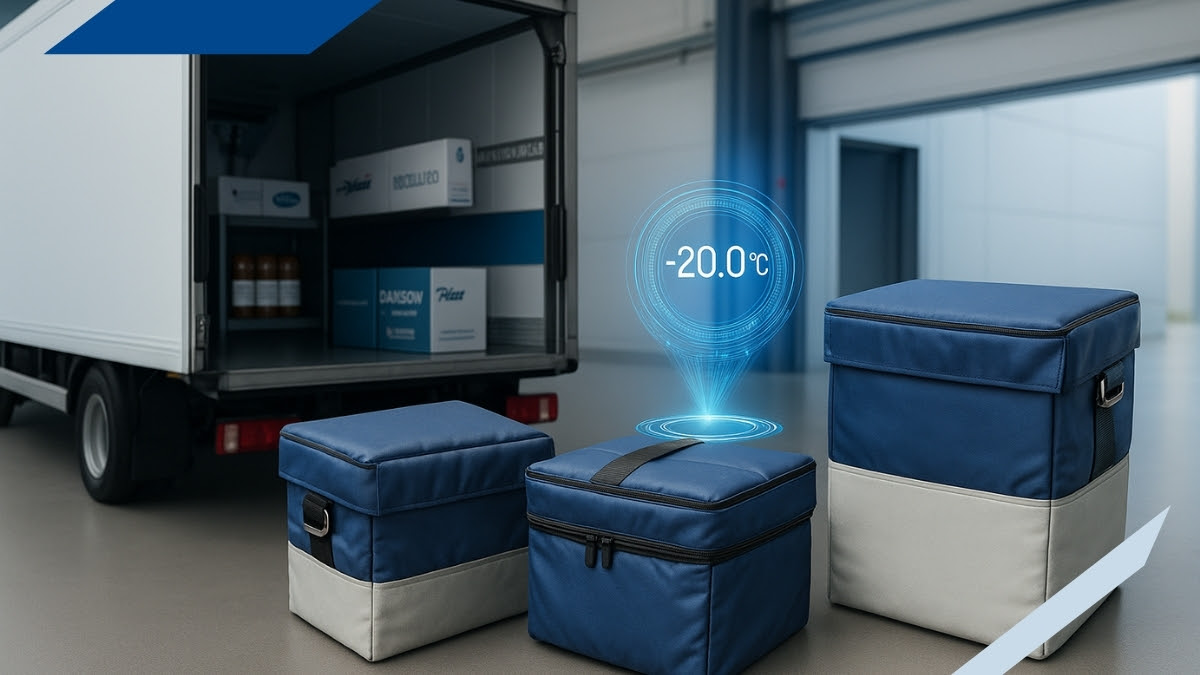
International. The rise of temperature-sensitive products is redefining global logistics. In industries such as pharmaceuticals, biotechnology, clinical trials, and veterinary medicines, the handling of thermolabile or refrigerated drugs has become a "surgical precision" operation.
Between 2018 and 2024, the volume of medicines that must be kept between 2°C and 8°C grew 48%, according to the Biopharma Cold Chain Sourcebook. However, thermal deviations are still costly: 35 billion dollars per year, according to IQVIA.
Faced with this pressure, logistics companies design highly controlled cold chains, which guarantee thermal stability from origin to final destination.
Handling biologics and pharmaceuticals requires extreme conditions – from deep-freezing at -70°C to refrigeration between +2°C and +8°C – placing a great deal of responsibility on each player in the chain.
According to Carlos Humberto Infante y Loya, founder and director of the Board of Directors of Kryotec, "companies with cold logistics needs, as well as specialized operators, must adapt their strategies specifically according to the sector they serve." He adds that "each one presents particular challenges, from strict regulation and patient trust in the pharmaceutical industry, to the complexity of preserving high-value biotech products or ensuring the integrity of critical samples in clinical trials, not to mention veterinary logistics, where efficient coverage and health safety are priorities."
1. Pharmaceutical: Precision and Confidence
Sensitive medicines – vaccines, biologics or oncology drugs – depend on strict control (+2 °C to +8 °C or deep freezing). A slight failure can compromise your effectiveness and patient confidence. For this reason, the companies incorporate monitoring systems and passive containers certified by COFEPRIS, the WHO and HACCP, to guarantee safe deliveries.
2. Biotechnology: sub-zero therapies
Gene therapies, cell therapies or monoclonal antibodies require temperatures below −70 °C. Each thermal deviation can mean millions of dollars in losses. To prevent this, companies adopt specialized multimodal transportation and state-of-the-art active or passive packaging with CFR 21 monitoring.
3. Clinical trials: integrity that validates results
Clinical trials handle unique biological samples—blood, tissue, or DNA—whose integrity is essential to validate studies and develop new drugs. Strategies include optimized routing, long-lasting passive packaging, and constant coordination between labs and carriers, ensuring that each sample arrives intact and within the set time.
4. Veterinary: animal health and food safety
Veterinary cold logistics protects animal health and agricultural productivity. Vaccines and biologics must be stored in controlled conditions, even in remote areas. Companies turn to reliable refrigerated transport, passive containers with constant monitoring and coverage programs that ensure distribution in rural regions.
"Although each sector faces its own challenges, they all agree on the urgency of strengthening their processes with technological innovation and solid and flexible logistics schemes that guarantee continuity and confidence in the cold chain," says Infante y Loya.
Technology has become the great ally to comply with international storage and transport protocols. Monitoring systems, along with passive containers, are now indispensable to maintaining the integrity of products.
Its effectiveness depends on preventive and corrective maintenance, the use of original spare parts and constant inspection. "More than technical support, these practices represent a necessary component of cold logistics, as they ensure that thermal control tools always operate in optimal conditions and with the levels of safety required by such sensitive products and materials," concludes the Kryotec expert.
The cold chain is no longer just a logistical process: it is the bridge between trust in science and the vulnerability of health and production systems. Its future will depend on the ability to innovate relentlessly and maintain processes with the same precision demanded by the products it protects.