
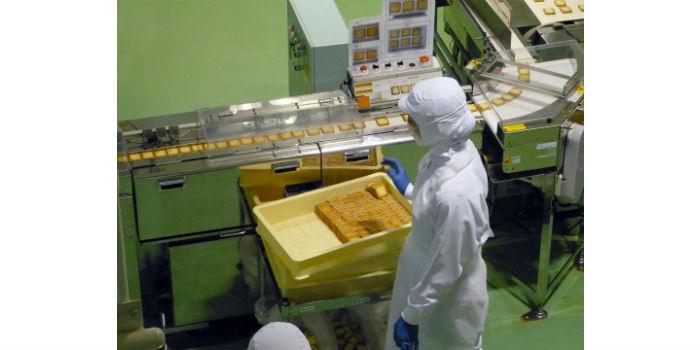
 In this second part we present the installation of a unified central cold water system for the confectionery and chocolate areas in "Dulces del Trópico".
by Camilo Botero*
Introduction: Dulces del Trópico (hypothetical name), developed a project that consists of the implementation of a central cold water system, which serves the existing plant of Dulcería, the current plant of Chocolatería and the expansion of the latter, maximizing the efficiency of the central system and leaving a single cold water system for operation throughout the company.
To meet this objective, several impediments had to be overcome that did not allow the joint operation of the plants mentioned above. Basically, the determining impediment to not being able to design, install and operate a single central system lay in the different water temperature levels required to achieve the dew points of each of the psychromometries of the plants. By way of clarification on the production of confectionery, it is a fact that the conditions required for the production of chocolates are more demanding than those required for the production of hard caramel.
A candy plant operates with a cold water temperature of 5°C while a chocolate plant must operate with water of 0°C. Understood the impediment only a traditional solution remains to be able to join the two plants in a central cold water system, which was to operate the 1,200 Tons of Refrigeration at 0 ° C since this would be the temperature required by psychometric processes. Although this solution was technically feasible, from an energy point of view it was completely inconvenient. The fact of producing water at 0°C implied an additional consumption approximately 30% higher in energy, for the operation of a plant like the Dulcería plant that only requires 5°C in the water.
In addition to all the problems associated with operation in these conditions, such as freezing, maintenance of glycol levels and greater insulation thicknesses to avoid condensation problems, in a tropical climate of high specific humidity. Looking for alternative products on the market, a possibility appears which allows to achieve the demanding conditions of chocolate with a water temperature of 5 ° C.
It is a product that uses a desiccant wheel for dehumidification, which has the ability to achieve low conditions of specific humidity inside an air-conditioned space. With this product it was possible to achieve the task of joining the plants in a central system having the benefits of a centralized system with lower Kw consumption for each ton of refrigeration generated. The design process and criteria are explained below:
Typical dehumidification process, using a desiccant wheel.
Current Chocolate Plant and Expansion: Within the framework of this design, a system was contemplated that meets the conditions of temperature and relative humidity in the areas of Wrapping, Dragees and also allows an optimal exchange of heat between the product and the air flows supplied in the Chocolate Coated Drums. For the air conditioning system of the expansion of the Chocolate plant, the following areas were taken into account:
Wrapping
It currently has the following system: An UMA (Air Handling Unit) of approximately 18,000 CFM, two compressors of 50 HP each, condensed by air by two remote equipment. Taking into account that the previous system met the conditions inside and that any modification in the equipment would take a downtime that the plant did not have; it was determined to continue operating with the same previous system and complement with an additional UTA for the expansion of 20,000 CFM and 48 TR. However, the capacity of the previous area was taken into account in the central system and this unit was converted to cold water and charged to said central system.
Tablets
Previously, the Grageas area and the drums were served by two locally manufactured UMAs, which were cooled by two water-counted compressors each with an approximate capacity of 50 TR and 70 TR, respectively. In our project, the following was proposed: an additional UTA of 47,600 m3/hr and 110 TR (387 Kw) that would carry the missing capacity both in flow and in outside air, and the conversion to cold water of the existing UTAs, which has already been done.
Drums
The drums have a totally new design, none of the above was reused either for the supply system or for the extraction system. This design included two UMAs of the desiccant technology described in the introduction, which operate with 100% outdoor air, of 6,500 CFM and 50 TR each, cooling and reheating coils to control relative humidity. The UMAs of the areas of Chocolate Wrapping, Dragees and the two Coated Drums included units of the new dehumidification technology, to allow to meet the required psychrometric conditions, working with water temperature at the entrance of the coils of 5° C, which as said, it is common in the central cold water system.
Candy Plant
Dulces del Trópico had installed an air conditioning system for the Dulcería Packaging area and a product cooling system for the cooling tunnel area. The aforementioned systems were direct expansion and were composed of 4 UMAs and 9 direct expansion units, condensed by air. Due to increases in production requirements, the addition of machinery and changes in new product specifications, it was necessary to improve these old systems.
For Dulces del Trópico this need to improve and increase its air conditioning and product cooling system, became a possibility to install an advanced system that allowed low operating costs, reduction in production stops, stable conditions inside the areas and finally a more environmentally friendly system. For this reason, an alternative consisting of six conventional UMAs, with cold water, was selected.
In the first stage, the purchase, assembly and commissioning of three UMAs with their duct systems for the cooling tunnel area was foreseen, and the change of the duct system of the Dulcería Packaging area. The cooling system is governed by digital controllers to optimize system operation, achieving the required conditions and minimizing energy consumption. Likewise, the operator can change and make schedules of ignition, stop and changes in the control parameters.
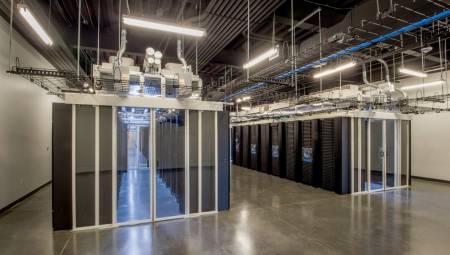
Summary of the Unified Central System Confectionery and Chocolate Plant: This cooling system consists of three water condensation chillers with a capacity of 400 TR nominal each, supply water temperature at 5 ºC, return at 10 ºC and condensation water entering at 28 ºC. Due to the operating temperature, the fluid of the system is 100% water and does not require glycols as in plants with a temperature of 0 ° C. The system coolant is R134a. To supply condensation water at 28ºC, three cooling towers were installed that work with four condensing pumps (one redundant). Each of the pumps moves a flow rate of 1,170 gpm of water.
A system of the decoupled type of pumping was selected by the characteristics of the load profile. The primary pumping system is constant speed and the secondary variable speed. The primary pumping system will be composed of four centrifugal pumps (one redundant) of 936 gpm (260 m3/hr) each and a head of 20 meters in a water column. The secondary pumping system is composed of two variable speed centrifugal pumps of 2,808 gpm (778 m3/hr) each and a head of 54 meters in a water column. The system operates with one pump and the second will be redundant. A variable speed drive adjusts the revolutions of the pump motor according to the signal from a pressure differential transmitter located at the critical reference point of the system.
Chocolate Plant
In order to prevent contamination in the product, it has been defined that in the UMAs of Grageas and Chocolate Wrap are provided with pre-filters of 35% ASHRAE (MERV 8) and filters of 65% ASHRAE (MERV 11). For the UMA's of drums there will be three filtration stages: pre-filters of 35% ASHRAE (MERV 8), filters of 65% ASHRAE (MERV 11) and filters of 95% ASHRAE (MERV 14).
Through the control network you can monitor system variables and change operating parameters (temperature, relative humidity, flow, on and off and operating hours). Field controllers have the ability to work stand alone (team control) and operate the system according to the established sequence. The temperature control for the Chocolate and Grageas Wrapping area is commanded by an average sensor located in the return duct of each of the units, connected to the control system that modulates the proportional two-way valves that control the entry of water to the post-cooling coils. In addition to this temperature control, there will be an ADP control which will maintain a fixed air temperature at the exit of the first coil.
Candy Plant
Product cooling area in tunnels: For the Product cooling area in tunnels, three UTA's were installed and the air flows are supplied directly to the cooling tunnels. The temperature required to cool the product is 11 °C and this is maintained through a control by ADP (Apparatus Dew Point). UMAs have control on the water side, by modulating a two-way, proportional valve.
In addition to cold water control, the handling units have the possibility of varying their air flow, with a variable speed drive connected to the fan motor. This frequency variation in the motor allows control of the supply air flow of each UMA. It was defined that the three UMAs would be provided with pre-filters (80-85 Arrestance) and filters of 65% efficiency. To pressurize the area, 1,000 CFM are entered through the outside air intake of each of the UMAs. Because the area is very open to the contiguous areas, it will only seek to maintain an air flow from the inside out, which is enough to keep the area without infiltrations, coming from the kitchen area.
Candy Packing Area
For the Packaging Area of Dulcería three UMAs were installed, which are responsible for maintaining the conditions inside the packaging area. The conditions required inside are 24 °C temperature and 45% relative humidity. The temperature control for this area is commanded by a sensor located in the return duct of each of the units. In addition to cold water control, UMAs have the possibility of modifying their air flow, through a variable speed drive connected to the fan motor. This frequency variation in the motor allows to have control of the supply air flow of each of them.
Depending on the internal load, the variable speed drive increases or decreases the frequency of the fan motor in order to adjust the required relative humidity point. Each UMA has its own independent supply and return pipeline system. It was defined that the three UMAs are provided with pre-filters (80-85 Arrestance) and filters of 65% efficiency.
To maintain optimal indoor air quality conditions, 4170 CFMs are entered through the outdoor air intake of the three UMAs that serve the area and each is under the command of a digital controller. It maintains the required conditions inside and alarms the operator's station in case of failure of any component of the system once it is connected to the higher level network. Also through this network you can monitor system variables and change operating parameters.