

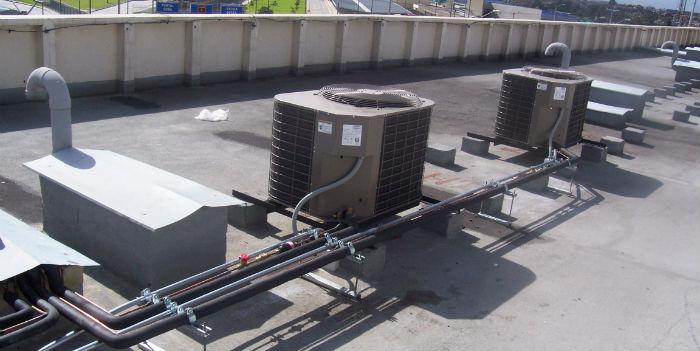
 Analyzing the design climatic conditions means obtaining important results to execute a project recognizing different levels of demand.
by Eng. Fabio Clavijo*
Background: The selection of climatic conditions in a project is the first step in the process of evaluating the thermal loads of a building and at this stage both the level of technical requirement of the project and the type of application must be analyzed.
This first step of definitions allows to ensure the validity and reliability of the air conditioning or refrigeration project in the useful life of the project and from there many calculations emerge that will allow to advance later in the selection of the equipment that will meet each and every one of the technical requirements of a project.
Criteria appear in this process that allow to recognize design conditions not only for the year, but for the different seasons or months of rain, heat or cold that have very different particularities from those reported in northern and southern areas that tend to present very similar annual patterns and cycles, however, in this Torrid Zone, climate manifestations must be studied with different criteria and patterns of energy consumption that are particular to this region of the world.
Thermal requirement criteria
Recognizing that each project has different levels of technical requirements is a first step of technical definitions and thus establishes the number of annual hours that the project could support under conditions that exceed the design requirements.
If we talk about cooling processes for air conditioning, it is very likely that in a shopping center, exceeding the design limits for 2% of the annual hours (175 hours) does not constitute a risk for its operation, however, in a laboratory this could mean operational risks and economic losses. For this reason, spaces of critical operating conditions must be considered with criteria of 0.4% (35 hours per year).
Office spaces on the other hand, are considered spaces of medium level of demand and treated with criteria of 1% (88 hours per year).
Applications
The most demanding operating conditions a system must face are associated with the critical application of a system.
It is established that when considering cooling systems in HVAC applications, the most demanding design condition is precisely the condition of higher temperature (Dry Bulb) outside associated with its coincident wet bulb temperature.
In turn, a project with a high demand for low humidity (Dehumidification) must consider the external conditions from the higher moisture content (Humidity Rat) reported by climate studies, and its corresponding temperature (dry bulb) coincidental.
The values that are studied to support CVR engineering studies (air conditioning, ventilation and cooling) are heating, cooling, dehumidification, humidification, evaporation and enthalpy.
Climate studies
To obtain reliable design information, studies are accepted from minimum records of ten (10) consecutive years taken hour by hour, daily, with the support of certified weather stations, which we know are available at the airports of each population.
In the study carried out in Colombia by ACAIRE, and under the direction of Eng. Fabio Clavijo, the objective was to expand the climate information for sixteen (16) cities, following the methodology established by ASHRAE – American Society of Heating, Refrigeration and Air Conditioning Engineers.
This research work provides a new advance and objective of similar studies carried out by ASHRAE that reports climatic conditions for five (5) Colombian cities, as well as previous studies carried out by ACAIRE in 2004 and 1987, and by the extinct SCMH (Colombian Service of Meteorology and Hydrology) in 1971.
Design weather conditions
Obtained the information in agreement with the IDEAM – Institute of Hydrology, Meteorology and Environmental Studies of Colombia – for the sixteen selected cities, we proceeded to validate the information obtained by statistical methods and then the enlistment to perform the processing of the information, for which purpose formulation stages were followed to complete the base of symmetric variables of the data, to move forward later with the percentile study for the set of variables, applications and levels of technical demand.
Climate zones
The research work, as anticipated, is supported by the need to document in a structured way the relevant climate information for the design of CVR systems and also on the need to recognize the climatic behavior that is particular to the Torrid zone.
A third contribution of these studies lead to review criteria and construction systems of buildings in Colombia, and by extension in the Torrid Zone, which support national policies and regulations to provide comfortable and efficient constructions in the energy-environmental.
Average typical year
It is clear that each climate zone requires efforts and constructive technical decisions that provide improved levels of energy-environmental performance, which is achieved through energy modeling exercises for different materials and construction methods.
In turn, the climate base of cities is based on data on temperature, humidity, wind speed and direction, for which purpose it is necessary to have hourly data that reflect average conditions for each hour of a typical year. Precisely this task requires historical data of the characteristics of those already elaborated, so the next step will be to integrate a work team to develop this information for each of the cities studied.
Building construction systems
It follows from the above, that there is still the task of specifying and advancing research projects that establish minimum acceptable criteria of materials and modes of construction of buildings for this region of the world.
These minimum criteria are based on optimized energy consumption, taking advantage of bioclimatic air conditioning opportunities and adoption of CVR systems with low environmental impact and reduction of the carbon footprint.
Energy modeling processes will allow to consistently document the results, which will be an important contribution to the engineering and architecture of the country and tropical countries.
Other results
The project included analysis of projection of maximum and minimum temperatures, by linear projection methods, which allowed estimating global warming trends for these Colombian cities with a time horizon of twenty-five (25) years.
The results show projected increases in maximum temperature, for Bogotá, exceeding 0.2°C every five years, while minimum temperatures show decreases of 0.6°C in the same period. The net result of climate change is 0.8°C every five years, which marks with concern the overflow of this phenomenon.
These results invite, not only to become aware, but to take action to contribute efforts and achieve concrete results that reduce this accelerated process of desertification facing the world.
The media and governments participate in these efforts today, but it is clear that these are very insufficient to mark a real change in trend.
There is only one way left. Rethink these efforts and integrate them vertically into society.
Generations to come thank us for the opportunity to provide them with a stable and progressive society.
* Eng. Fabio Clavijo. President of Tecnaire Ltda. President of ASHRAE Colombia Chapter. Life member ASHRAE. Former President and honorary member of ACAIRE. Lecturer, researcher and author of several books and technical papers. [email protected]








Hola Elkin, puedes obtener más información con el autor del artículo, el Ing. Fabio Clavijo, en su correo: [email protected]
Saludos.