
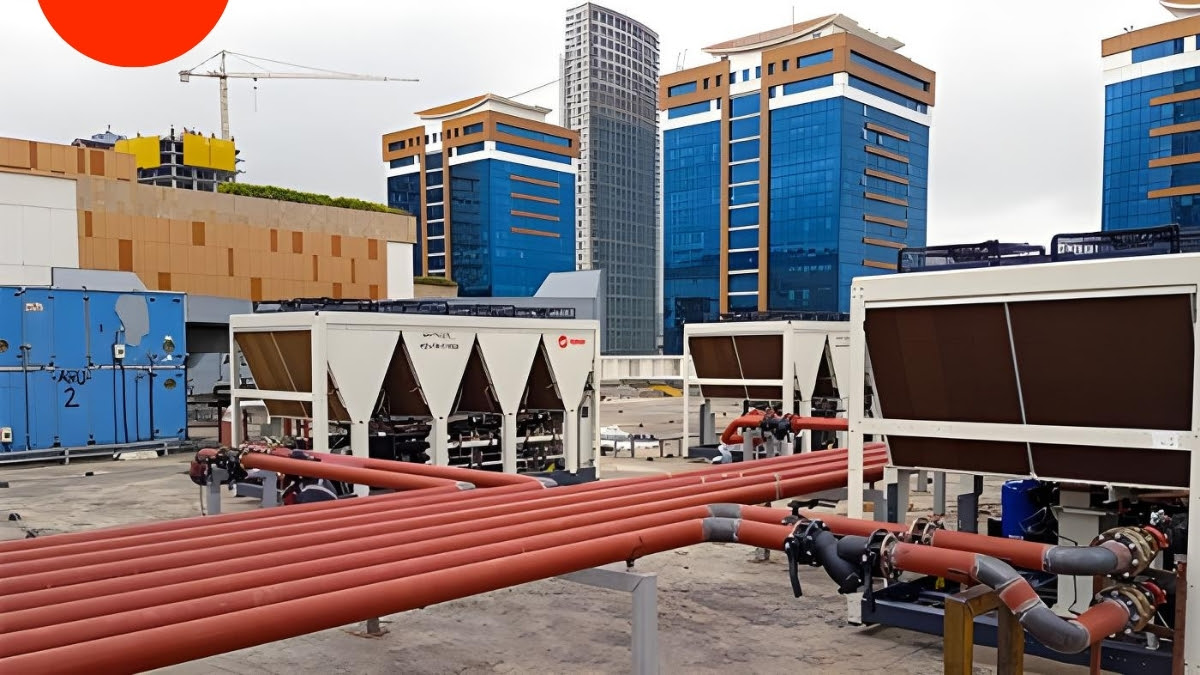
Mexico. Thermal comfort ceased to be a luxury in offices and industrial spaces to become a decisive criterion within the Mexican real estate market.
Today, indoor temperature, air quality and energy efficiency not only impact productivity, but also determine the profitability and value of buildings.
In a context of more frequent extreme temperatures and greater regulatory pressure, the demand for properties with efficient air conditioning systems is growing rapidly. The International Labour Organization (ILO) warns that increased heat stress could lead to the loss of 2.2% of global working hours by 2030, equivalent to 2.4 trillion dollars. Mexico is one of the countries with the greatest risk in this scenario.
At the local level, the National Commission for the Efficient Use of Energy (Conuee) projects that, without immediate measures, emissions from commercial and residential buildings could multiply by 6.7 by 2050, representing more than 75 million tons of CO₂.
"Guaranteeing thermal comfort in buildings efficiently and without compromising energy consumption becomes a determining factor to increase the attractiveness, occupancy and return on investment in commercial real estate," says Gerardo Sánchez, Director of Services at Trane Mexico.
The demands of the occupiers have transformed the design and conversion of real estate spaces. Factors such as indoor temperature, relative humidity or ventilation are now critical variables in the choice of a property.
Among the solutions that are being incorporated from the early stages of planning are:
- Intelligent HVAC systems, which adjust temperature and ventilation based on the environment and occupancy.
- Real-time monitoring to prevent deviations in thermal performance.
- Controlled ventilation with outside air, key to improving indoor air quality.
- Energy automation, which optimises consumption without compromising comfort.
- Thermal zoning, which adapts the climate according to the needs of each area.
Thermal comfort already appears in the risk and profitability analyses of investors and tenants. In cities such as Monterrey, Guadalajara or Mexico City, where temperature extremes are becoming more frequent, buildings with efficient and resilient systems have a greater capacity to attract and retain tenants.
"We see a clear change: it is no longer asked if the building has air conditioning, but how the indoor climate is managed, how efficient it is and what impact it has on the end-user experience," concludes Gerardo Sánchez, Director of Services at Trane Mexico.