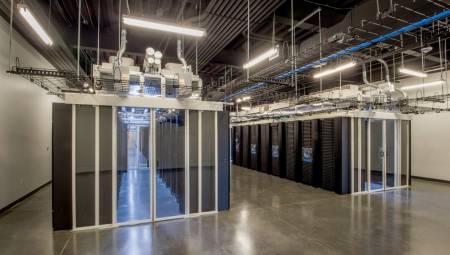

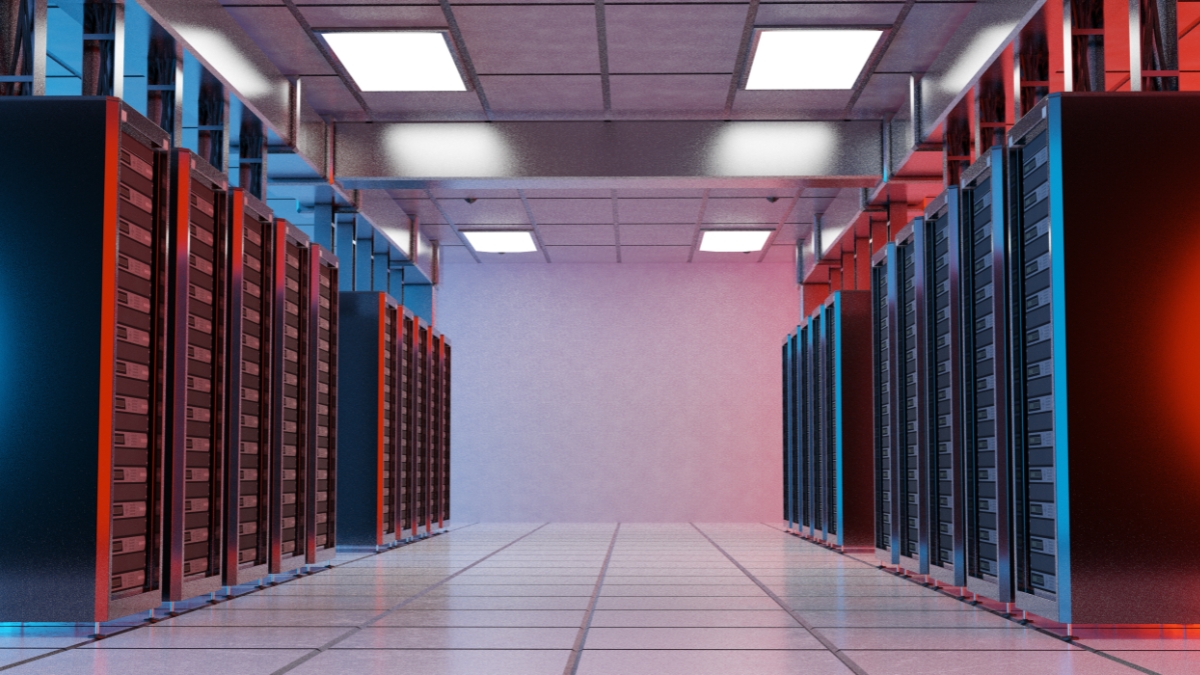
Latin America. Data centers require year-round cooling, as nearly 100 percent of the electricity consumed by the continuous operation of servers, networking equipment, and storage devices is dissipated into heat, Vertiv highlights.
In today's AI-driven world, data centers and high-performance computing play an important role in powering the technological revolution. With a clear focus on solutions that meet today's needs while enabling future growth, data center operators prioritize infrastructure that emphasizes adaptability, energy efficiency, and reliability. The adventure towards more responsible growth requires a comprehensive point of view. It is not only about efficiency, but also about resource management, alternative energy, waste reduction and the adoption of a circular economy, the company continues.
As data centers evolve, a holistic design goes beyond technical specifications; it involves smart decision-making and collaboration to navigate through AI-driven transformations. This also applies to the reuse of heat, one of the ways that could contribute to a more energy-efficient future. Because more and more heat is generated, there is a constant search for the reuse of heat as an alternative to its release into the environment.
What is heat reuse?
Heat reuse (or recovery) revolves around capturing and reusing excess heat generated by data center IT equipment and cooling systems. The IT equipment generates heat, which is captured by the cooling systems to expel it to the outside; This keeps the equipment at an unchanging temperature. Instead of wasting this extra heat, heat reuse systems capture it and use it for other opportune purposes.
According to Vertiv, a well-designed heat reuse system contributes to efficiency and environmental responsibility efforts by reducing not only overall energy costs, but also greenhouse gas emissions associated with traditional heating and cooling methods. Heat reuse and demand adaptation One of the biggest challenges is the balance between the thermal demand of applications/buildings close to the data center and the actual waste heat during the winter or summer.
During the summer, data centers produce a greater volume of excess heat, which is expelled by the air-cooled units at a higher rate temperature and, depending on the demand for heat reuse, which varies based on the application, the heat expelled could be more than the amount needed. During the winter, free-cooling systems are activated mainly to save energy while cooling IT equipment, but the heat generated by the data center is often insufficient and too low in temperature for reuse. In these cases, to cover a maximum thermal demand, a heat pump is needed to increase the amount of heat and the temperature.
Distance and infrastructure
The most convenient case for heat reuse is to have nearby applications/buildings that can take advantage of it, as installing district heating networks can be expensive. In fact, longer pipes between the data center and buildings translate into higher costs and heat recovery temperatures. Another factor that could affect the cost of heat reuse is the potential need to exceed architectural boundaries such as in the case of older buildings, which may require higher heat recovery temperatures.
The costs
The initial investment for heat reuse can be weighed against current costs to determine whether the energy consumed for heat reuse it compensates for the savings achieved through it. Sometimes, waste heat can be sold to specific users to generate revenue and accelerate return on investment. The size of the data center and the heat reuse system affect costs and the calculation of the break-even point. High-temperature applications may be less attractive due to higher electricity costs; Therefore, focusing on low-temperature options could prove safer for the success of a project. Of course, this assessment needs to be done on a case-by-case basis, as the break-even point varies depending on the size of the data center and the amount of heat available.
Regulatory and environmental scenarios
In European countries, the debate on energy policy has focused on replacing fossil fuel-based energy sources with renewable and alternative energy sources such as wind, solar and hydrogen. Recently, the EU has begun to look at the possibility of adding heat reuse to the mix of alternative energy resources.
Under the revised Energy Efficiency Directive (EED), if the data center has a nominal input of 1 MW or greater, its waste heat will need to be used unless it is economically or technically unfeasible. The requirement will be applicable once the member states transpose it into national legislation. However, the examination is not required whether waste heat from data centres will be connected directly to a district heating network or other networks in nearby areas, as the Renewable Energy Directive and the Energy Performance in Buildings Directive are intended to incentivise.
The power of service integration and heat reuse
Service and maintenance play a critical role in facilitating the uninterrupted operation of data centers and the effective utilization of heat reuse applications. In fact, disruptions to data center activities not only affect operations, but also heat generation, which in turn affects its potential for reuse. This is amplified in liquid and high-density cooling configurations.
The service, by specialized engineers who are continuously trained in the latest technologies, offers invaluable capabilities for data collection and insights, which can be translated into actionable insights to optimize both cooling and heat reuse applications in data centers. The service also enhances the potential for heat reuse through modernization opportunities.
In addition, service providers can customize and commission thermal unit software to find the optimal balance between cooling efficiency and heat reuse in the data center.
Monitoring and control logics
Vertiv Liebert iCOM controls are designed to monitor various data center systems, specifically in cooling operations. By regulating temperature, humidity, and airflow in real time, Vertiv's monitoring and control logic reduces downtime and equipment failure. In addition, it facilitates condition-based maintenance by providing real-time information that allows for automated adjustments and condition-based maintenance strategies.