
Electrification is redefining industrial steam and hot water generation, driving high-capacity electrode boilers under modular, turnkey schemes that simplify their integration and reduce costs.
By Ethan Elliott
Turnkey boiler systems avoid the risks and complexity associated with a comprehensive modernization. The use of modular components further optimizes the process.
Modern high-capacity electrode boilers are redefining the way industrial facilities and district heating networks generate steam and hot water. Designed to operate on high-voltage electricity, today's systems can offer capacities of up to 68 MW and steam pressures reaching 39 barg, placing them firmly in the range traditionally occupied by large boilers fueled by fossil fuels.
However, as the demand for electrification increases, the technology itself is no longer the main challenge. The focus is now on how these systems are delivered, integrated, and operated. It is becoming less common to procure electrode boilers as standalone equipment. Instead, projects are often executed by external contractors responsible for complete system integration, reflecting the increasing complexity of modern boiler installations.
In many cases, an EPC contractor is appointed to oversee the full scope of the project, covering engineering, procurement, and construction. Certain elements, such as process design and development of the building layout and architectural concepts, are managed in-house, while the rest of the work is performed by subcontractors specializing in piping, electrical work, and structural fabrication.
Now, that model is increasingly being replaced by single-source suppliers who execute all the work in-house, delivering fully integrated, turnkey solutions. These offerings include the boiler along with all the ancillary equipment needed for its installation, and can be built directly on site or delivered as prefabricated units for quick assembly.
These modular designs can reduce project time from months to just a few weeks, while lowering overall costs. By limiting on-site work, the complexity and expense of installing equipment in existing spaces saturated with pipes and metal structures is avoided.
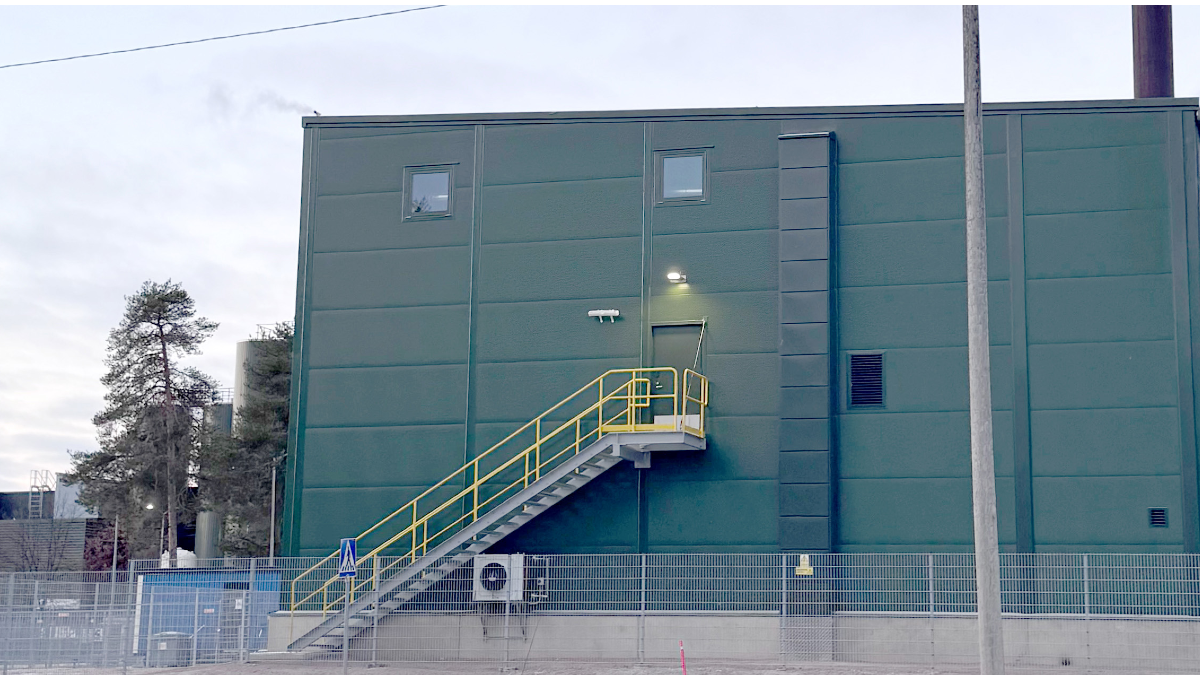
"Designing and building a new boiler room off-site allows the job to be completed more efficiently," says Juha Mäntynen, CEO of CT Industrial Oy (CTI), a Finnish CleanTech supplier specializing in turnkey, zero-emission, high-efficiency energy systems, including high-voltage electrode boilers for industrial and district heating applications in 19 European countries.
"All the metal structures in the building, concrete work, pipe assembly, electrical, and control systems – everything is included," adds Mäntynen. At CTI, this requires an in-house team of approximately 35 assemblers and welders responsible for fabrication and installation, along with engineers in charge of comprehensive project management, process and mechanical engineering, automation, electrical systems, and commissioning.
Turnkey delivery allows customers to take a virtually hands-off approach to modernizing their boilers, avoiding the complexity and coordination burden typically associated with large infrastructure projects.
"This method involves fewer risks," says Mäntynen. "The customer doesn't need to commit employees to a project management group. They can concentrate on their own business and manage this type of project with just a few people. Having a fixed price also makes budget planning easier."
The boiler defines the system
According to Mäntynen, the scope of a project depends on the customer's existing infrastructure and the available space. Some facilities already have a building ready for boiler installation, while others do not.
When the project is developed in an existing building, the plant manager typically assigns a designated space for the boiler system. CTI begins by performing an on-site assessment and a detailed 3D scan of the area. This scan is converted into a digital model that allows the boiler and associated equipment to be precisely adjusted within the available space.
In situations where no prior structure exists, CTI can take responsibility for both the design and construction of the facility. In this approach, the process begins with the architectural and engineering design of the boiler room.
The type of boiler and its specific use—hot water or steam—usually determine the overall configuration and dimensional requirements.
Hot water systems require fewer components, while steam boiler installations include additional subsystems such as feedwater systems, pumps, pressure-reducing equipment, and water treatment systems.
For electrode boilers, CTI collaborates with Acme Engineering, a North American manufacturer of industrial and commercial boilers, to supply high-voltage electrode boilers to the European market.
Electrode boilers are offered in horizontal configurations with capacities typically reaching between 10 and 12 megawatts. When higher power is required, a vertical configuration becomes necessary, which directly affects the overall height of the unit. Horizontal models offer a compact profile, typically limited to about 3.5 meters in height, while vertical models typically measure between six and eight meters.
Electrical infrastructure must also be considered. Although customers typically supply the main transformer to power the boiler, contractors can take on this responsibility. This can include a complete electrical system starting with a high-voltage supply of 110 kV, reduced to 20 kV, along with all necessary switching equipment.
In an electrode boiler system, a low-voltage transformer is typically required to supply power to control and automation systems, such as PLCs, instrumentation for measuring temperature, pressure, flow, and conductivity of water, human-machine interfaces, safety interlocks, alarm systems, and control circuits for auxiliary equipment such as valves and pumps.
A modular approach
While integrating new equipment into existing facilities may seem advantageous, these environments often contain extensive networks of pipes, metal framing, and other constraints. These conditions restrict design options and typically require substantial on-site modifications, increasing installation complexity, extending timelines, and raising overall costs.
In contrast, a prefabricated boiler room offers much greater flexibility and efficiency. Full control of the design allows the system to be optimized from the start, including the strategic use of modularization and prefabrication to reduce on-site work, improve quality, and streamline installation.
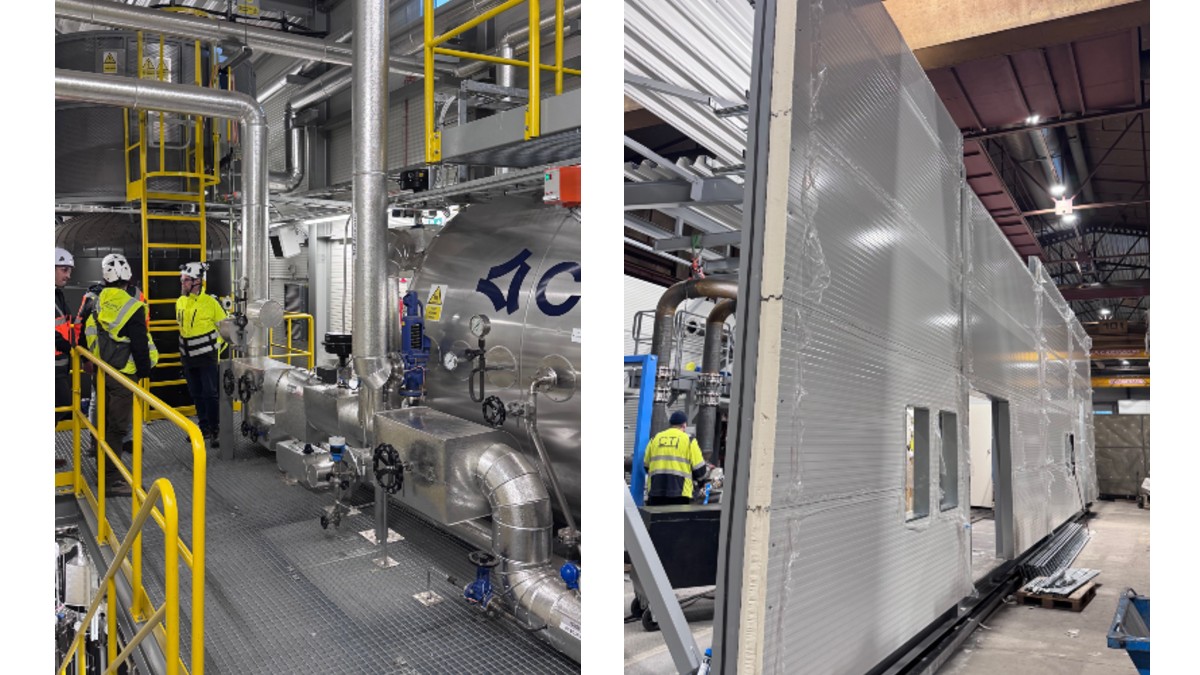
In many cases, the complete hot water or steam system can be assembled at CTI facilities as a single module similar in size to a shipping container. Plant-fabricated modules reduce the overall cost, require less on-site space, and significantly simplify installation. All piping connections, alignment verification, and bump tests are completed prior to transportation.
These modular solutions are suitable for both steam and hot water applications, and can be deployed in horizontal or vertical configurations. In applications where ceiling height is limited or system dimensions must meet transportation restrictions, a horizontal unit may be recommended.
Mäntynen notes that Acme Engineering is unique in offering a horizontal hot water boiler design particularly suitable for retrofit projects.
Acme Engineering also offers vertical boilers, including the jet boiler, capable of handling higher pressures with modulation capability from 0 to 100%, and the submerged electrode boiler, configurable for both hot water and steam applications.
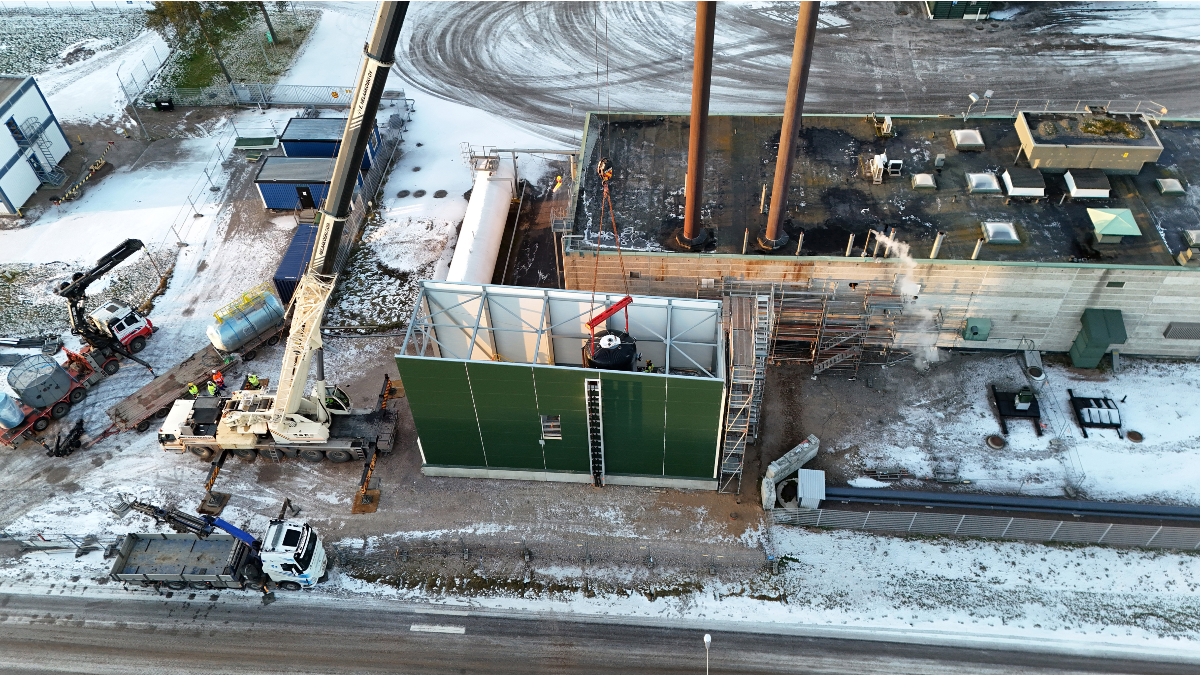
According to Mäntynen, in a recent project the complete boiler room structure built around a horizontal Acme Engineering unit measured approximately 19 meters long, 7.5 meters wide and 6 meters high. In larger facilities, the system can be divided into multiple transportable sections that are shipped anywhere in the world and require only minimal on-site assembly.
In another example, at a large cheese-making plant in Valio Haapavesi, the existing boiler room had no space available for the new equipment. As a result, a new boiler building was built next to the original. Subsequently, the existing and new systems were connected by a dedicated pipe line to balance and operate them as a single plant.
CTI is in the early stages of expanding this approach for electric boilers, but market interest is already strong. Mäntynen says EPC contractors across Europe are turning to CTI for modular boiler installations, as are customers looking to cut costs.
"We have customers who are very interested in this approach because the cost of transporting a large boiler room is very high, and with prefabricated modules, we can reduce that price by a third," concludes Mäntynen.
*Ethan Elliott is a technical writer based in Torrance, California, specializing in industrial technologies.