
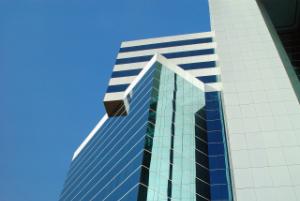
 The environmental trend of recent years has led architects and engineers to execute modern projects to make buildings efficient and self-sustaining spaces.
by Lennox
The environmental trend of recent years has led architects and engineers to execute modern projects to make buildings efficient and self-sustaining spaces.
by Lennox
What exactly is a "zero energy" building? It is a construction that produces as much energy as it uses in its operation in a given period of 12 months, which has zero energy consumption and zero carbon emissions.
Reaching the maximum level of sustainable energy consumption, that of the zero energy building, is possible and is a joint effort between the owner, occupants, architect, contractors and engineers of the building.
What does zero energy mean?
For a building to reach zero energy status all the energy used in it must be offset by a renewable energy supply (internal or external). This requires careful evaluation of alternative energy sources and environmentally friendly technologies, such as wind and solar energy, high-efficiency HVAC (heating, air conditioning and ventilation) systems, solar thermal energy, domestic solar hot water installations, geothermal energy, biogas and biomass energy (derived from organic resources) and hydropower.
It also involves a careful analysis of the building's orientation, thermal mass, natural lighting, integrated system controls, natural ventilation and microchannel condensers that improve the efficiency of the HVAC system.
The role of the contractor
Contractors play a key role in the energy compensation process. Expertise is required to help reduce electrical loads, install high-efficiency HVAC systems and alternative energy systems, and make recommendations on energy-efficient products.
With a market for new buildings and renovations exceeding $600 billion annually, according to the Commercial Buildings Consortium, green and zero-energy building standards offer a great opportunity for contractors to establish themselves as experts in a growing market.
Zero energy standards can also bring contractors economic benefits. According to the Department of Energy (DOE), using eco-friendly construction techniques can lower material costs and reduce unnecessary waste. The DOE also predicts that while most green building planning decisions are made by developers, owners, and architects, contractors will increasingly be asked to come up with solutions and practices on the type of green building materials, products, and designs optimal for a specific project.
Similarly, local and national governments are increasingly demanding the use of green building techniques for new construction and rehabilitation projects. As new regulations and codes from the U.S. Green Building Council and the American Society on Heating, Refrigeration, and Air Conditioning (ASHRAE) are implemented for commercial construction, "green" contractors have a competitive advantage in succeeding in bidding processes for new construction projects.
Where is zero energy going?
Due to the growing interest of society in the design of green and sustainable buildings, there is a growing eagerness to design high-performance buildings that go beyond the minimum requirements.
Paragraph 431 of the Energy Security and Independence Act of 2007 (EISA) requires federal construction to reduce fossil fuel use by 30% by 2015. It also calls for all new federal buildings to conform to a timeline for reducing fossil fuel use, until reaching zero by 2030.
Studies conducted by the National Renewable Energy Laboratory indicate that it is possible to achieve a reduction of 50% to 55% in an economical way in new constructions. Finally, while there are significant opportunities to save energy in existing constructions, studies by the McKinsey Global Institute estimate that considerable financial incentives would be needed to drive the market.
Useful guidance to reach zero level
In the face of these findings, ASHRAE is developing the Energy Efficiency Guide in three installments for commercial constructions. It also attempts to start a series to achieve savings of 50%, as well as a series to achieve zero energy constructions (which is expected to be completed between 2013 and 2016, if sufficient funds are available). The guides can be downloaded for free from the ASHRAE website.
For now, achieving zero-energy buildings remains an elusive goal, but there are a few recommendations that can help you get started in this process:
Examine the orientation of the building to fit the climate zone.
- Optimize high-performance fenestration.
- Use low density ambient light (intensity regulation)
- Reduce electrical loads on sconces and lighting equipment to decrease air conditioning loads and minimize energy recovery in outdoor ventilation systems.
- Prefer solar products that use free, clean energy from the sun for the building's energy supply.
- Include blinds that give sun protection in the summer and that prevent heat loss in the winter.
- Optimize glass performance to balance thermal, solar and visible transmission characteristics.
- Optimize window-to-wall ratio and opaque insulation performance.
- Bring controlled natural light to the occupied space and reduce brightness.
- Incorporate open windows, grilles and air ducts for natural ventilation.
- Harness the earth's natural energy as a source of heating and cooling
- Design lighting circuits and small energy circuits to facilitate the handling of electrical load.
There are several manufacturers of HAVC and materials that will help you achieve your green building goals.