
by Héctor Gómez Pérez
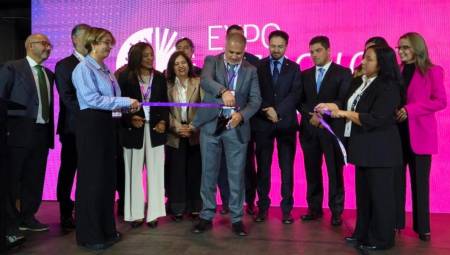
In its fifth version, Refricolombia had more than 500 participants including speakers, attendees and logistics team. We are already preparing for next year's event to be held at the Compensar Convention Center in Bogotá, Colombia, between July 16 and 17. However, it is worth retracing the steps and recapitulating some conferences that day after day become more important within the industry; on this occasion, ACR LATINOAMÉRICA spoke with Norberto Aguilar, industrial refrigeration sales engineer at Danfoss Industries S.A. de C.V., to expand the information he presented during one of his lectures at the academic exhibition and which he called CO2 refrigerant of the future.
A frequent issue on the agendas of many countries around the world is the growing importance that has been given to environmental issues. In this sense, there are many initiatives that have been launched in recent years to reduce the negative environmental impact and global warming: green buildings, cleaner diesel production, accelerated production of biofuels, energy savings in different industries and households, campaigns that promote the rational consumption of water, etc. The refrigeration industry has not been on the sidelines of this phenomenon and there is increasing talk of environmentally friendly refrigerants, including CO2.
But why did this Mexican speaker call his presentation CO2 refrigerant of the future? "A presentation by the Danish Institute of Technology indicates that CO2 is not the refrigerant of the future but the future itself. From an ecological point of view this refrigerant is a natural classification (R744), in which water, ammonia, propane, methane, etc. are also found. Among its characteristics, it stands out that it is non-toxic, non-flammable and with ODP (ozone depletion potential) classifications of 0 and GWP (atmospheric warming potential) of 1", according to Aguilar.
The first appearance of CO2 in refrigeration took place in England with a patent filed by Alexander Twining in 1850; Thaddeus S.C. Lowe experimented with it on balloons for military use, but also designed an ice machine using CO2 in 1867. Lowe in turn developed a machine to transport frozen meat on ships. This period of CO2 extended until 1930 when its use began to decrease due to the appearance of R11, R12, among others. The second moment, which could be classified as the current one, began to be generated since 1993 from the research carried out by Dr. G Lorentzen.
Compared to the group of natural refrigerants that were mentioned a few lines ago, CO2 does not have some disadvantages that they do have. For example, ammonia is toxic, hydrocarbons are flammable, and water has limited application possibilities. As for the characteristics of CO2, the one that stands out the most is its triple point that is at a temperature of -56.6 oC and a pressure of 5.18 bar. On the other hand, the critical pressure is at 73.6 bar and a temperature of 31oC.
As for the equipment, it must be considered that not all existing equipment is suitable for working with CO2, due to the pressure with which they must be put into operation. It is also important to note that the diameters of the pipes are smaller.
Other considerations and safety
In the field of industrial refrigeration, CO2 will not replace ammonia because the systems that work with it are hybrids and need ammonia or another refrigerant within a cascade system. As for its application in industry, it is used for very low temperatures (in the range of -50oC to -30oC) in refrigeration chambers or food freezing tunnels. Within domestic use it is used in heating in heat pumps and automotive air conditioning.
Unlike Ammonia, CO2 lacks a characteristic odor which is an important safety aspect. "CO2 replaces air and causes oxygen loss. In the presence of sufficient oxygen, CO2 has a narcotic effect at high concentrations, but in small amounts CO2 has a stimulating effect on breathing. Due to the acidic characteristics of CO2, some irritations may appear particularly in the mucous membrane of the nose, throat and eyes," Aguilar said.
The symptoms associated with air inhalation with CO2 are increased as follows:
* 0.04% is the concentration of CO2 in atmospheric air.
* 2% increases the rate of respiration by 50%.
* A 10-minute exposure to a 3% concentration increases the rate of breathing by 100%
* 5% represents a 300% increase in the rate of breathing. Sweating and headache appear after an hour.
* 8% is the limit of short-term exposure.
* 8 -10% there are headaches after 10 or 12 minutes, dizziness, hearing problems, blood pressure and heart rate increase, plus there is nausea.
* 10 - 18%. After a few minutes, epileptic seizures, muscle cramps and loss of consciousness may appear, in addition to shock. Affected individuals recover quickly with fresh air.
* 18 – 20%. Symptoms similar to those of a heart attack appear.
Leaks of this refrigerant are identified by infrared CO2 sensors ranging from 5000 ppm (parts per million) to 9000 ppm which is the permitted ASHRAE 15 standard.
Faced with the issue of the minimum requirements that must have the systems that work with CO2 Aguilar said that "there is a principle in refrigeration that is summarized in a good project, a good installation, zero problems. You must take into account the working pressures, the humidity that affects the system and have the corresponding safety valves."
Finally, faced with the question of the application of CO2-based refrigerants in Latin America, this was what Aguilar answered: "several applications are in projects in Brazil and Mexico; it already has the support of companies that have worldwide experience in these solutions and have a presence in Latin America. It should be noted that the first application in the region is very close. In a recent visit to a plant with CO2 application in the United States, the engineering firm told me that from 2004 to date they have 14 facilities and have signed projects until 2010. "