Select your language

Operation of digital controllers

To know which of these is more convenient in certain applications, it is best to know the processing system of digital controller systems and the needs it can meet.

by: Application Engineering of the Full Gauge Controls


Modern vs. analog technology

Digital controllers are derived from the branch of control theory that uses microcontrollers and microcomputers as data processing units. The theory of digital controls deals with the issues of the behavior of dynamic systems through discrete samples in time, that is, the control system will show (digitize) the output of the system when it is controlled (plant), in a constant period of time. Each discrete sample will represent the state of the plant's output at the time it was acquired.

Through several consecutive samples, it is likely that the controller can monitor the behavior of the dynamic system and, in this way, act in its operation. According to Nyquist's Theorem, the frequency with which consecutive samples are acquired must be, not minimal, twice the maximum frequency of the plant output.

Unlike analog controllers, which use continuous samples over time, digital controllers work with numbers that represent the analog level of each sample acquired. The function of transforming the analog level of each discrete sample into a digital number is left to the A/D Converter (Analog/Digital). This converter is generally present inside the microcontroller and has, as the most common resolution, 10 bits.

The controller uses a reference as the standard value in which the output of the plant must be maintained, in a stable manner. This reference (setpoint) must be provided by the user, usually through the control panel of the controller. With the setpoint, the controller will be able to perform the system error calculation, that is, how far the current output of the plant is from the reference. From the calculated error, the controller will know how much energy to apply in the plant, so that it keeps the output of the same with the value of the setpoint.

When the input of a controller is connected to the output of a plant, and this controller is acting in some way, we can say that the control system has a closed mesh. In this type of control, the controller is constantly observing the plant, so that it can act immediately, in the case of variation in its output. A practical example is the temperature control of a refrigerator, the plant (the refrigerator) has an outlet in the temperature that you want to stabilize, around a reference (setpoint). The controller will digitize the temperature of the refrigerator, perform the necessary calculations for the control and, then, activate the compressor of the refrigerator, so that the reference temperature is reached.

When a person opens the refrigerator door, it can disturb the plant system, causing the internal temperature to rise rapidly. As the control thermostat is always monitoring the situation of the exit of the plant (control in closed mesh), the latter will be able to feel it.

So when a disturbance occurs, it will drive the compressor in a way that nullifies this disturbance. Thus we can say that the controller connected in closed loop has the ability to detect oscillations and disturbances in the plant, and thus will act to cancel it.

In order for a plant to be controlled, the digital controller will have to act above it, in some way. Depending on each application, an actuator compatible with the plant system must be used, for example, if you want to control the speed of a motor, the digital controller will have to be connected to a frequency inverter. This frequency inverter is the actuator that will modulate the speed of the motor, as the output of the controller does.

Other actuators can also be used, such as: dimmers, proportional valves, relays, etc.

The main advantages of digital controllers over analog controllers are:

•Low cost: cost of microcontrollers and semi-conductors that have been greatly reduced in the last 20 years.
•Flexibility: ease of configuration and reconfiguration through software. Static operation: Digital controllers are less prone to variations due to environmental conditions.
More complex control logic, as they are easier to implement.

Serial communication option

Digital process control is an optimal choice for systems that require low installation cost, noise immunity and increased accuracy.

No comments

• If you're already registered, please log in first. Your email will not be published.

Comments are closed

The comments for this content are closed.

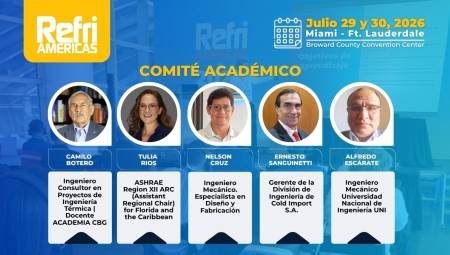
RefriAméricas 2026 will focus its Academic Congress on efficiency, decarbonization and technological transformation in HVAC/R

RefriAméricas 2026 will focus its Academic Congress on efficiency, decarbonization and technological transformation in HVAC/R

United States. The RefriAméricas 2026 Academic Congress will have as its thematic axis the "Efficiency, decarbonization and technological transformation in HVAC/R", a proposal that seeks to respond...

Johnson Controls highlights the impact of energy efficiency in critical industries in its 2026 Sustainability Report

Johnson Controls highlights the impact of energy efficiency in critical industries in its 2026 Sustainability Report

International. The company presented its 2026 Sustainability Report, in which it outlines advances in decarbonization, energy efficiency, and performance in critical environments such as hospitals,...

Jeff Littleton Announces Retirement as Executive Vice President

Jeff Littleton Announces Retirement as Executive Vice President

United States. The organization announced the retirement of Jeff Littleton as executive vice president of the organization, a position he will leave at the beginning of 2027, after more than two...

AHR Expo Mexico 2025 was recognized as the Best Event of the Year at EVENTUS 29

AHR Expo Mexico 2025 was recognized as the Best Event of the Year at EVENTUS 29

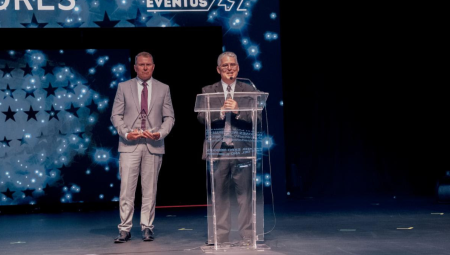
Mexico. During the EVENTUS 29 gala, held as part of Cintermex's 35th anniversary, the 2025 edition of AHR Expo Mexico 2025 received recognition as the "Best Event of the Year", a distinction awarded...

Refrigerated transport opens up opportunities to reduce water consumption in the cold chain

Refrigerated transport opens up opportunities to reduce water consumption in the cold chain

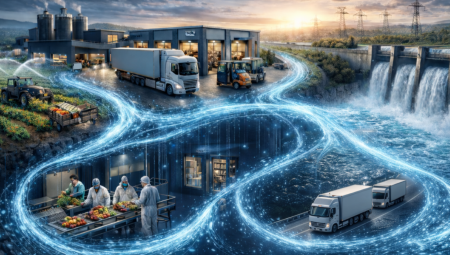
Mexico. Cold chain logistics faces new challenges in the face of the growing need to make more efficient use of natural resources. Beyond ensuring operational efficiency, refrigerated cargo...

Technical Training Drives Strengthening HVAC Talent

Technical Training Drives Strengthening HVAC Talent

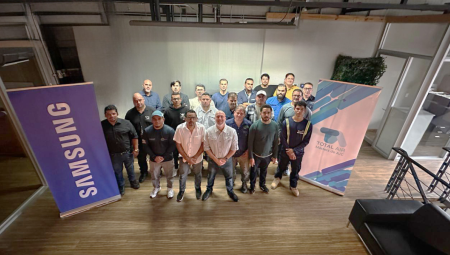
Costa Rica. Samsung and the Costa Rican company Total Air held the series of talks "Technical Training in Samsung – Total Air DVM S2 Systems", an initiative aimed at strengthening technical...

ASHRAE Highlights Industry Priorities in Technical Program for its 2026 Annual Conference

ASHRAE Highlights Industry Priorities in Technical Program for its 2026 Annual Conference

United States. ASHRAE unveiled the technical program for its 2026 Annual Conference, which will be held June 27-July 1 in Austin and will bring together professionals from the HVAC&R industry to...

The KNX standard is consolidated in Chile: experts demystify building automation with a view to a sustainable future

The KNX standard is consolidated in Chile: experts demystify building automation with a view to a sustainable future

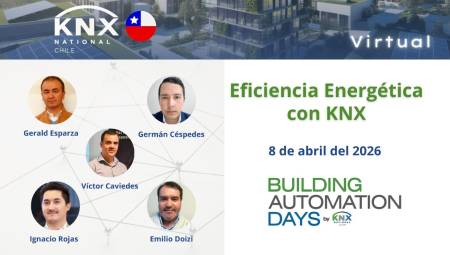
Santiago, Chile. The smart construction sector in Chile took a relevant step with the holding of the Building Automation Days by KNX LATAM Virtual, Chile 2026, an informative and educational space...

The Invisible Power of Cold: Thermal Efficiency for Data Centers in the Age of Artificial Intelligence

The Invisible Power of Cold: Thermal Efficiency for Data Centers in the Age of Artificial Intelligence

International. Behind the digital cloud and artificial intelligence there is a complex, dense and constantly operating physical infrastructure. In this environment, the cold becomes an invisible...

Expo Frío Calor Chile 2026 successfully closes and consolidates its position in the HVAC/R industry

Expo Frío Calor Chile 2026 successfully closes and consolidates its position in the HVAC/R industry

Chile. With an agenda focused on innovation, sustainability and professional development, Expo Frío Calor Chile 2026 ended after three intense days held at Centro Parque, consolidating itself as the...

Free Subscription
Remember Me
SUBSCRIBE TO OUR NEWSLETTER
DO YOU NEED A SERVICE OR PRODUCT QUOTE?
LASTEST INTERVIEWS
SITE SPONSORS


LASTEST NEWSLETTER
Ultimo Info-Boletin