
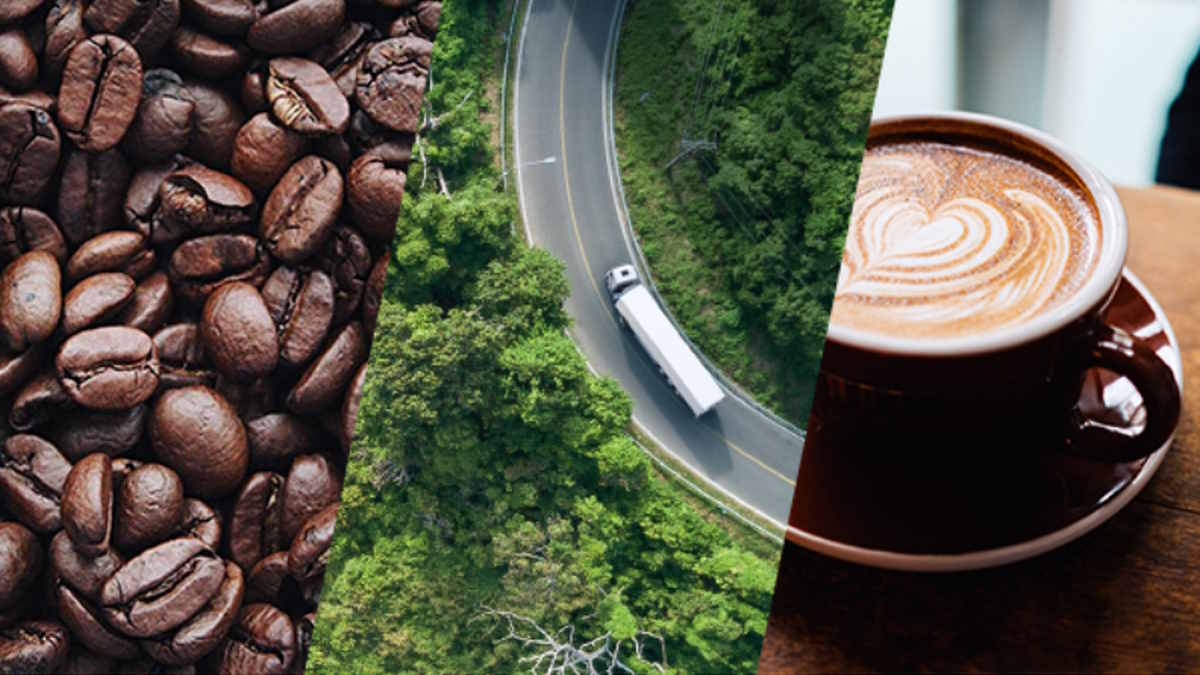
Latin America. The celebration of Mother's Day is approaching, in Mexico and Colombia on May 10 and 14 respectively, a special date that evokes a good breakfast with a good coffee. From the air conditioning industry this also relates, necessarily, to the logistics of food transport.
While the gifts given to mothers may vary according to personal tastes and budget, a must of the date is breakfast in bed, as Thermo King says "this breakfast would not be complete without that delicious and aromatic coffee". But for this drink to maintain its characteristics of aroma, color and flavor, "it is necessary to use new technologies applied to land transport, adapted to the different processes of refrigerated cargo."
In that sense, for Thermo King, a company that offers temperature-controlled systems for transportation, green coffee beans must arrive in good condition and with plenty of time to be roasted and packaged. On the other hand, "roasted coffee must also maintain freshness until the moment of consumption."
To achieve this, intelligent solutions based on analysis and technology must be available for their transportation so that transport and logistics companies can monitor in real time the temperature and other critical parameters of the products during their transport, thus ensuring that they arrive at their destination in the right conditions.
Facts about Mother's Day in Mexico
According to data from the last Population and Housing Census, in Mexico there would be a total of 35,221,314 mothers, which means that more than 35 million people will celebrate their mothers this coming May 10; and even more, if we consider that women are strong representatives in coffee consumption in Latin America, being up to 70% of total consumption in some countries.
A single cup of coffee needs about 70 beans, which go through several stages before ending up on the table. After sprouting the seed, it takes a coffee plant about 7 years to grow and produce its first harvest. What we call "coffee beans" are actually the seeds in the fruits of the plant, which are similar to cherries. Once these fruits are collected, the green seeds are extracted and dried so that they become the dark grains that provide energy to moms to perform each of their daily tasks.
Once the green beans have been dried, husked and roasted, they are loaded into burlap sacks, which are packed in the huge containers that will transport the beans around the world. The boat is the most common means of transport for coffee, and as the most important aspect of transporting coffee beans is keeping them dry, the boat seems a particular choice. But global demand for coffee is high and increasing every year, so high capacity of freighters remains the preferred shipping method.
Ideally, coffee beans should be transported at room temperature, with an acceptable temperature range of between 10°C and 20°C. And, although it seems very broad, keeping the grains dry and at this temperature is of vital importance. The main cause of water damage when transporting cargo by sea is not the ocean, but the "sweat of the containers" caused by the rapid fluctuations of the ambient temperature.
Therefore, when transporting them from the warm port of São Paulo to the cold fjords of Norway, the temperature of a container must be kept under precise control. If condensation from the container drips onto the burlap sacks and penetrates the grains, the entire cargo spoils.
And, conversely, the temperature cannot be very cold either. Intensive cooling of the cargo container during transport carries the same risks, since instead of forming in the container, "sweat" (condensation) will form directly on the load, which simply means that the grains spoil even faster.
"All of the above implies that, in addition to precise temperature control, ventilation is also vital. Thermo King's Container Fresh & Frozen (CFF) containers offer enhanced humidity and temperature controls, keeping grains safe on their long journey," said José Carlos Gómez, LAR Norte Sales Director.
When the freighter arrives at its destination, capillary distribution begins. Bags of coffee are shipped throughout the destination country to coffee shops, supermarket shelves or coffee shops. Critical conditions during shipping are just as important now. Thermo King units keep beans fresh in final distribution.
"The cups of coffee included in moms' breakfasts this May 10 require a great effort from people around the world and refrigerated transport is indispensable throughout the supply chain to ensure that they can start the day with a boost of energy and a delicious taste," concluded José Carlos.