
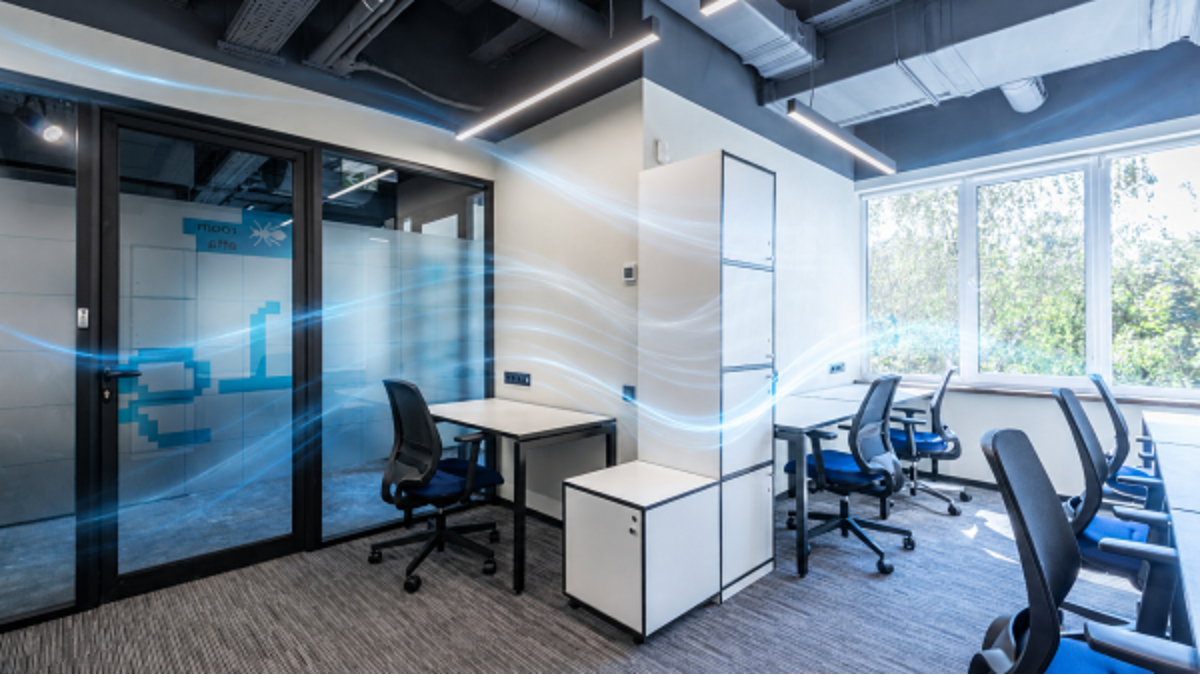
Mexico. Indoor air quality is consolidated as one of the most important challenges for public health and the operation of buildings, in a context where people spend up to 90% of their time in closed spaces.
Specialists in the HVAC sector warn that poor ventilation and lack of monitoring of critical variables can increase the risk of respiratory and cardiovascular diseases and even affect cognitive performance.
An article published in 2023 in the journal Nature, titled "Hidden Harms of Indoor Air Pollution: Five Steps to Exposing Them," points out that air pollution is a determining factor in diseases such as asthma, heart conditions, strokes, and lung cancer, in addition to its possible relationship with the development of dementia.
Although over the past few decades many countries have strengthened regulations to reduce outdoor air pollution, indoor air quality remains less regulated. This difference is especially relevant considering that the World Health Organization (WHO) attributed 3.2 million deaths in 2020 to indoor air pollution, a figure close to the 3.5 million deaths associated with outdoor air.
According to Belimo specialists, maintaining adequate indoor air quality requires permanently controlling parameters such as the concentration of carbon dioxide (CO₂), relative humidity, temperature and volatile organic compounds (VOCs).
The increase in CO₂, mainly caused by the occupation of spaces, can generate symptoms such as fatigue, dizziness, difficulty concentrating and respiratory problems. On the other hand, high levels of humidity favor the proliferation of mold, bacteria and mites, while VOCs, present in construction materials, furniture and cleaning products, can cause irritation, headaches and other respiratory conditions.
The international benchmark for assessing these conditions is the ANSI/ASHRAE 62.1-2022 standard, which defines acceptable indoor air as air that does not contain pollutants in harmful concentrations and with which at least 80% of exposed people say they are satisfied.
Permanent monitoring of environmental conditions and preventive maintenance of HVAC systems are considered fundamental elements to maintain good indoor air quality.
In this sense, Belimo highlights the importance of using sensors capable of accurately measuring variables such as temperature, humidity and CO₂ levels, since a decalibration can affect the performance of HVAC equipment and reduce the energy efficiency of the building.
Likewise, the integration of environmental sensors with building management systems (BMS), using protocols such as BACnet, Modbus and MP-Bus, allows ventilation to be automatically adjusted when CO₂ levels increase, favouring a greater entry of fresh air into offices, schools, hospitals and other high-occupancy spaces.
Regular maintenance also plays a key role. Timely cleaning and replacement of filters helps preserve both air quality and the operational efficiency of the system. Differential pressure measurement technologies also make it possible to monitor the status of the filters and generate alerts when interventions are necessary.
The growing focus on indoor air quality reflects a shift in the way modern buildings are designed and operated. Beyond thermal comfort, the incorporation of monitoring technologies, intelligent ventilation strategies and preventive maintenance programs are emerging as essential tools to create healthier, more efficient and safer environments for their occupants.