
 International. Heat pumps use ambient energy to provide us with heat. However, they generally require synthetic refrigerants, which contain environmentally harmful fluorinated greenhouse gases (F gases). Fraunhofer researchers have now contributed to the development of a heat pump that uses propane. The pump is more climate friendly and more efficient.
"Heating and hot water account for about 40 percent of Germany's final energy consumption. Burning high-quality fossil fuels like natural gas or crude oil not only makes little energy sense, but also damages the climate. Each unit of electrical energy required to operate a heat pump, often derived from renewable resources, generates three to five units of CO2-neutral caloric energy. This makes heat pumps an important element in the implementation of Germany's transition to a sustainable energy system," says Dr. Marek Miara, who coordinates work on heat pumps at the Fraunhofer Institute for Solar Energy Systems ISE in Freiburg.
A heat pump works similarly to a refrigerator. The refrigerant absorbs the heat inside the refrigerator and transports it outside. The difference is that the heat left to freely escape from the back of a refrigerator is what a heat pump extracts, in this case from the ground, groundwater or ambient air, to heat our homes or water.
To achieve this, the heated and vaporized refrigerant is compressed, which increases its temperature and pressure. The hot refrigerant gas releases its heat into the water and condenses. Hot water flows into underfloor heating systems, radiators or hot water storage tanks, while liquid coolant, which is now cold, flows back into the so-called evaporator, where it once again absorbs thermal energy. The cycle starts again from the beginning.
The report says a natural and environmentally friendly alternative to synthetic refrigerants is propane, which is already gaining popularity in air conditioning and refrigeration systems. But its use in heat pumps is relatively new.
Because even though propane has excellent thermodynamic properties, it is highly flammable, and this poses a challenge when used in a heat cycle.
"If you want to use propane, you need to keep the volume of refrigerant as low as possible to minimize the risks involved," says Dr. Lena Schnabel, who heads the heating and cooling technologies department at Fraunhofer ISE.
The solution of the ISE researchers, together with their European research partners, is to employ heat exchangers with highly compact, welded fins, which work well with small volumes of liquid. Thermal energy is transferred from one substance flowing to the other through heat exchangers. These are made up of numerous parallel channels containing the circulating refrigerant, which either absorb heat (known as "vaporizers") or radiate it ("condensers"). "The liquid should vaporize completely or re-condense over the length of the stroke. To ensure that they operate efficiently, the vapor-liquid ratio must be identical across all channels. Generally, that's not easy to achieve, and it becomes especially difficult if you're also trying to limit the volume of refrigerant."
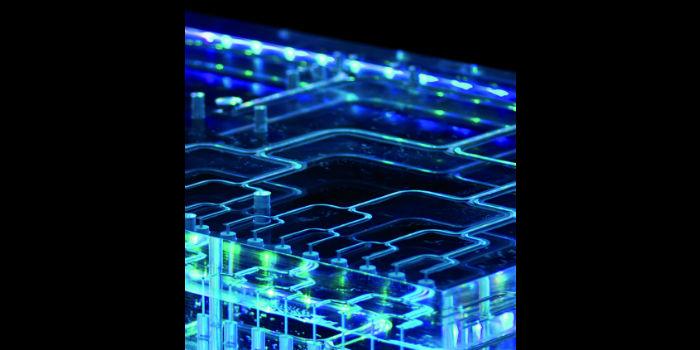
To solve the problem, Schnabel and his team developed a distributor with a bionic structure: "Conventional Venturi distributors look like a bunch of spaghetti made from many thin tubes that fuse where they meet the vaporizer. Our distributor is different: it has a continuous branching structure, like the branches and twigs of a tree, which ensure an even distribution of the refrigerant in the individual channels of the evaporator, even with a small volume of refrigerant. "This structure allows the optimal use of the entire surface of the heat exchanger, which improves efficiency.
To reduce the risk of explosion when compressing propane, Schnabel and his team used a specialized compressor in which all ignition sources were encapsulated. They paid close attention when connecting the individual components of the pump to prevent propane from escaping. "We are currently modifying the technical design of the heat pump, testing the long-term behavior of its components and developing sustainable safety strategies," says Schnabel.
Source: Fraunhofer Institute.