
International. This is according to the NGO Global Energy Association, based on a study by the Federal Research Center of the Russian Academy of Sciences in Dagestan, which was originally published in the journal Applied Physics Letters.
Previously, the research concluded that "the environmental safety of household appliance cooling systems could be ensured by the use of an alloy of nickel, manganese, tin and a small amount of copper, which is almost irreversibly cooled to 13 degrees Celsius under the influence of magnetic fields."
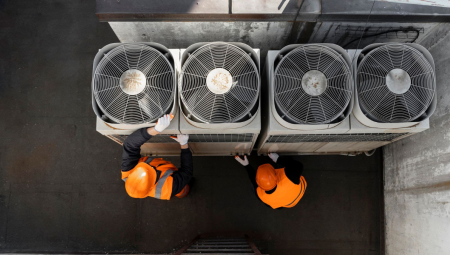
As a general rule, cooling systems used in air conditioners and refrigerators work by compressor cooling: the temperature decreases due to refrigerants (usually gases), substances that, when evaporated, remove heat from the object that needs to be cooled.
However, at elevated temperatures, such as when a refrigerator is thawed, refrigerants release toxic compounds, including fluorine and hydrogen chloride.
A greener alternative is magnetic cooling, during which a solid substance changes its temperature in response to the surrounding magnetic field. If an object is placed in a gradually increasing magnetic field, the substance will begin to cool and absorb heat from the environment. Alternatively, when the magnetic field decreases, the object will release heat and heat up.
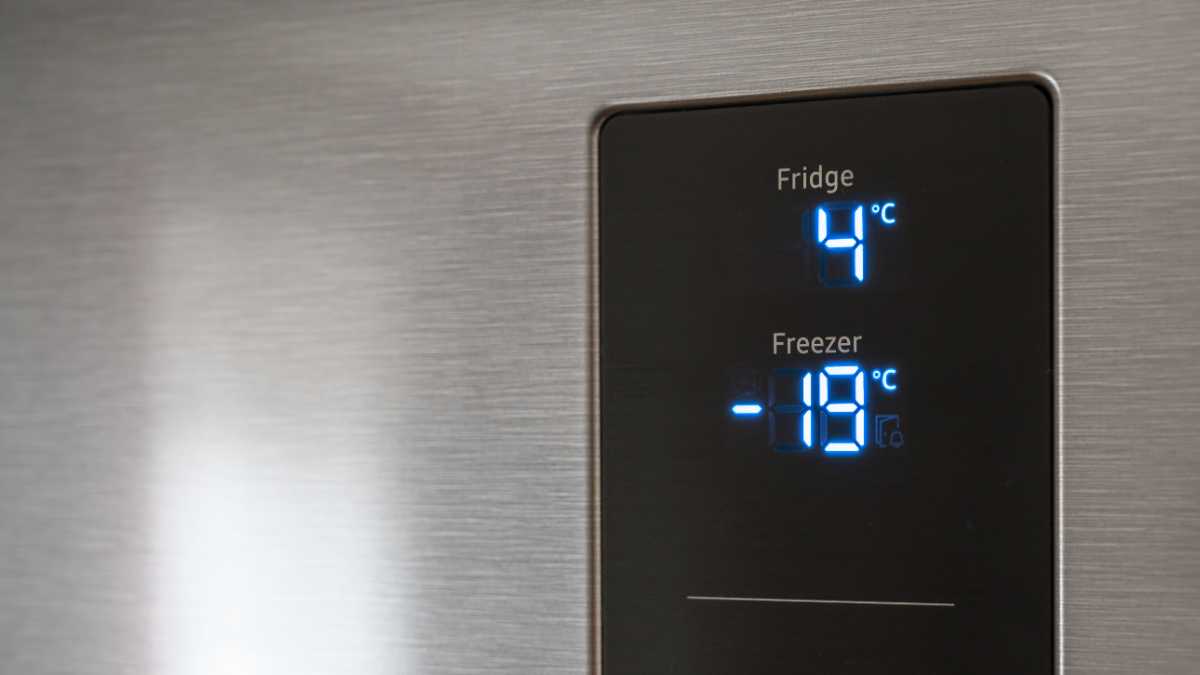
Magnetic cooling also works in a wider temperature range, including temperatures close to absolute zero (minus 273.15 degrees Celsius), while a conventional refrigerator works in the range of plus 4 to -20 degrees Celsius. For this reason, scientists are actively looking for materials that are particularly effective in terms of magnetic cooling.
One of these materials was proposed by scientists at the Amirkhanov Institute of Physics at the Federal Research Center RAS in Dagestan, who studied the ability of an alloy based on nickel, manganese, tin, and a small amount of copper to change its temperature under the influence of a magnetic field.
The authors conducted an experiment in which they placed the alloy in a device to which constant, pulsed magnetic fields were applied. To evaluate the magnetic properties of the alloy under study, the scientists changed the temperature in the device within the range of -25 to +50 degrees Celsius.
The greatest effect was achieved at a device temperature of 1.85 degrees Celsius: under these conditions, the influence of the magnetic field on the alloy made it possible to reduce its temperature by 13.15 degrees Celsius. At the time of exposure to the magnetic field, the sample was isolated from the environment and could not exchange heat with it. After the magnetic field was turned off, the alloy maintained a low temperature (minus 11 degrees Celsius).
This means that the new alloy can potentially be used in hybrid refrigeration systems that combine the compressor and magnetic methods.
"The proposed method makes it possible to cool objects to -13 degrees Celsius in just 0.1 seconds. For comparison, it takes an average of 1 minute to cool a gas refrigerant-based refrigerator by 1.8 degrees Celsius. Therefore, magnetic cooling demonstrates more efficient results. The data obtained will be useful in the development of hybrid refrigeration systems, such as household refrigerators," said Adler Gamzatov, principal investigator of the Amyrganov Institute of Physics.
As Sergey Alekseenko, winner of the Global Energy Prize and member of the RAS, said in an interview with the Global Energy Association, stopping the use of freons and other ozone-depleting halogen-containing industrial gases could solve the problem of ozone layer destruction.
"As an alternative, manufacturers have started using ozone-friendly freons, mainly hydrofluorocarbons of the Freon 134a type, which is now widely used in refrigerators. But both ozone-depleting and non-ozone-depleting freons are strong greenhouse gases. Therefore, its use will also be banned in the near future," he said.