Select your language

Cryogenic distillation: a promising technology for carbon capture

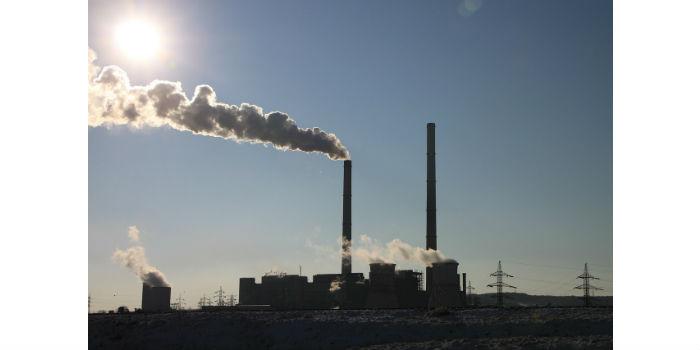
International. Carbon capture and storage (CCS) encompasses an integrated set of technologies that can prevent large amounts of CO2 from being released into the atmosphere by the use of fossil fuels.

The CCS chain consists of three parts: capturing carbon dioxide, transporting it to a storage site by ship or pipeline, and using it as a resource to create valuable products or services or storing it underground in geological formations.

CCS technologies, which can be applied in the industrial sector and for power generation, could play an important role in meeting energy and climate objectives. In the IEA's Sustainable Development Scenario, CCS accounts for 7% of the cumulative emission reductions needed globally by 2040. This implies a rapid expansion of ccS deployment, from around 30 million tonnes (Mt) of CO2 currently captured each year to 2 300 Mt per year by 2040. [1]

As of 2019, there are 17 CCS facilities in operation in the world, including around 70% in North America, which capture 31.5Mt of CO2 per year, of which 3.7 Mt are stored geologically. Most of them are industrial plants and not electric. [2]

- Publicidad -

Its uses encompass a variety of industrial applications, outstanding reduction of process CO2 or exhaust gases and in natural gas processing. In the former, depending on the technology, CO2 is separated from H2 (pre-combustion), N2 (afterburning) and H2O (oxy-combustion, which burns hydrocarbons with pure O2), while in natural gas processing, CO2 is separated from CH4 and light hydrocarbons.

CO2 capture technologies are available on the market, but in general they are expensive and contribute to around 70-80% of the total cost of a complete CCS system.

The main CO2 separation technologies that can be applied to isolate CO2 from the flue/fuel gas stream before transport are absorption (the most mature process), adsorption, chemical loop, membrane separation, hydrate-based separation and cryogenic distillation.

The cryogenic distillation process is as follows: the combustion gas containing CO2 is cooled to the deublimation temperature (-100 to -135 ° C) and then solidified. CO2 is separated from other light gases and compressed at a high pressure of 100 to 200 times atmospheric pressure. The amount of CO2 recovered can reach 90-95% of the flue gas. Since distillation takes place at an extremely low temperature and high pressure, it is an energy-intensive process estimated at 600-660 kWh per ton of CO2 recovered in liquid form. Several patented processes have been developed and research has mainly focused on cost optimization. CO2 is obtained as a liquid with benefits in the transport of CO2 (compressors are not needed, pumps are used instead). It is suitable for a high CO2 content. [3] [4]. Cryogenic carbon capture technology is a relatively young technology but is being actively developed. In addition, cryogenic distillation has been adopted for many years in industry for CO2 recovery.

In reality, there are very few large-scale CCS projects in operation that use cryogenic distillation. [3] However, it should be noted that a facility using this technology is being built at a fertilizer plant in Zibo City, Shangdong Province, China. Once completed, it is expected to capture 400 Mt of CO2 per year.

Source: International Refrigeration Institute.

Duván Chaverra Agudelo
Duván Chaverra AgudeloEmail: [email protected]
Editor Jefe
Jefe Editorial en Latin Press, Inc,. Comunicador Social y Periodista con experiencia de más de 12 años en medios de comunicación. Apasionado por la tecnología. Director Académico del Congreso RefriAméricas.

No comments

• If you're already registered, please log in first. Your email will not be published.

Leave your comment

In reply to Some User
RefriAméricas 2026 will focus its Academic Congress on efficiency, decarbonization and technological transformation in HVAC/R

RefriAméricas 2026 will focus its Academic Congress on efficiency, decarbonization and technological transformation in HVAC/R

United States. The RefriAméricas 2026 Academic Congress will have as its thematic axis the "Efficiency, decarbonization and technological transformation in HVAC/R", a proposal that seeks to respond...

Johnson Controls highlights the impact of energy efficiency in critical industries in its 2026 Sustainability Report

Johnson Controls highlights the impact of energy efficiency in critical industries in its 2026 Sustainability Report

International. The company presented its 2026 Sustainability Report, in which it outlines advances in decarbonization, energy efficiency, and performance in critical environments such as hospitals,...

Jeff Littleton Announces Retirement as Executive Vice President

Jeff Littleton Announces Retirement as Executive Vice President

United States. The organization announced the retirement of Jeff Littleton as executive vice president of the organization, a position he will leave at the beginning of 2027, after more than two...

AHR Expo Mexico 2025 was recognized as the Best Event of the Year at EVENTUS 29

AHR Expo Mexico 2025 was recognized as the Best Event of the Year at EVENTUS 29

Mexico. During the EVENTUS 29 gala, held as part of Cintermex's 35th anniversary, the 2025 edition of AHR Expo Mexico 2025 received recognition as the "Best Event of the Year", a distinction awarded...

Refrigerated transport opens up opportunities to reduce water consumption in the cold chain

Refrigerated transport opens up opportunities to reduce water consumption in the cold chain

Mexico. Cold chain logistics faces new challenges in the face of the growing need to make more efficient use of natural resources. Beyond ensuring operational efficiency, refrigerated cargo...

Technical Training Drives Strengthening HVAC Talent

Technical Training Drives Strengthening HVAC Talent

Costa Rica. Samsung and the Costa Rican company Total Air held the series of talks "Technical Training in Samsung – Total Air DVM S2 Systems", an initiative aimed at strengthening technical...

ASHRAE Highlights Industry Priorities in Technical Program for its 2026 Annual Conference

ASHRAE Highlights Industry Priorities in Technical Program for its 2026 Annual Conference

United States. ASHRAE unveiled the technical program for its 2026 Annual Conference, which will be held June 27-July 1 in Austin and will bring together professionals from the HVAC&R industry to...

The KNX standard is consolidated in Chile: experts demystify building automation with a view to a sustainable future

The KNX standard is consolidated in Chile: experts demystify building automation with a view to a sustainable future

Santiago, Chile. The smart construction sector in Chile took a relevant step with the holding of the Building Automation Days by KNX LATAM Virtual, Chile 2026, an informative and educational space...

The Invisible Power of Cold: Thermal Efficiency for Data Centers in the Age of Artificial Intelligence

The Invisible Power of Cold: Thermal Efficiency for Data Centers in the Age of Artificial Intelligence

International. Behind the digital cloud and artificial intelligence there is a complex, dense and constantly operating physical infrastructure. In this environment, the cold becomes an invisible...

Expo Frío Calor Chile 2026 successfully closes and consolidates its position in the HVAC/R industry

Expo Frío Calor Chile 2026 successfully closes and consolidates its position in the HVAC/R industry

Chile. With an agenda focused on innovation, sustainability and professional development, Expo Frío Calor Chile 2026 ended after three intense days held at Centro Parque, consolidating itself as the...

Free Subscription
Remember Me
SUBSCRIBE TO OUR NEWSLETTER
DO YOU NEED A SERVICE OR PRODUCT QUOTE?
LASTEST INTERVIEWS
SITE SPONSORS


LASTEST NEWSLETTER
Ultimo Info-Boletin