
 The inventors of past centuries generated the first ideas for the creation of air conditioning. This is the story of a system that continues to develop to be more efficient.
by Alfredo Sotolongo*
The inventors of past centuries generated the first ideas for the creation of air conditioning. This is the story of a system that continues to develop to be more efficient.
by Alfredo Sotolongo*
In this opinion piece I will depart from the technical applications and focus on the history of air conditioning, as all of us who read this publication have lived and grown up within the HVAC industry.
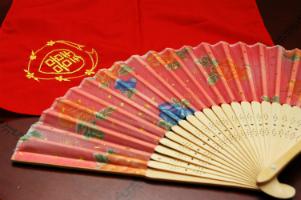
In our tropical climates during the hottest days, our ancestors sought to cool off by moving to areas near the coast or to the mountains. The other alternative was to increase the evaporation of sweat through the hand fan that was invented more than 4,000 years ago. The fan increases air circulation on the skin and actually achieves the same effect you get in cooling towers.
One of the first to develop the fan to move greater amounts of air were the Chinese; in the second century the inventor Ding Huan developed the first fan that could move large masses of air. This one moved manually and with a diameter of about 2 meters could refresh an entire room.
I understand that in 1758 the American patriot, Benjamin Franklin, wrote a letter to a friend where he explains that he had experimented with rapidly evaporating volatile liquids such as alcohol and ether to cool water. In the same letter he says that he managed to lower the water temperature from 64⁰F to 6⁰F, below the 32⁰F of the freezing point of the water, producing ice.
In 1818, the English physicist Michael Faraday showed that if a volatile substance, such as ammonia, is compressed and condensed using mechanical force and then allowed to evaporate quickly, water can be cooled.
A few years later, Medical Doctor John Gorrie, in the state of Florida, noticed that patients recovered much better in cold climates than in hot ones. Gorrie installed ice trays glued to the ceiling over the patients' beds. The air cooled and came down on the patient, as the cold air is heavier than the hot air and came out of the room through openings in the floor.
In this way Dr. Gorrie managed to keep them fresh and improve the condition of his patients. This was considered the first air conditioning system, but it was too expensive because they had to transport the ice on ships from the northern United States to Florida.
Dr. Gorrie continued to experiment to make ice mechanically and in 1851 he was granted the patent for a machine that operated based on faraday's principle. He left medicine to devote himself to perfecting his invention, but when the person who financed his research died, it was not possible for him to continue and died in poverty in 1855.
And Willis Carrier arrived
In 1902 a young engineer working for the Buffalo Forge Company in Buffalo, NY, under the name Willis Carrier, invented modern air conditioning equipment for use in a printing press. Compressing ammonia and then evaporating it cooled water, which passed through coils that in turn cooled and removed water vapor from the air by means of condensation. The air was distributed using ducts throughout the printing press.
This system was practical for industrial applications, but was not recommended for other applications as ammonia is very toxic and the equipment took up a lot of space. At the beginning of the 20s, Carrier developed a much more efficient compressor and used a refrigerant that was non-toxic that was called dielene. The DuPont company did not develop Freon until 1928.
Around 1925 air conditioning was used in movie theaters and department stores as they realized that the presence of customers increased considerably in the hot summer months. However, office buildings did not use air conditioning until manufacturers began to verify, through studies, that it increased employee productivity by up to 24% in air-conditioned environments.
Thanks to research and development, together with the incentives of our free market system, companies like AAON have managed to be at the forefront of energy savings in the HVAC industry. Increasingly innovative and high-efficiency equipment has been developed at prices that allow a quick return on investment.
Like other inventions of the twentieth century, air conditioning has generated a great impact on industrial, commercial and residential applications, improving productivity and comfort. For us, the new challenge is to effectively apply these recent products to meet the need to save energy while obtaining the fastest return on investment.
If you require more information on any of the topics covered in this column, please contact me at the email [email protected]
*  President of Protec, Inc., he is certified as a professional engineer in Puerto Rico and in the state of Florida; he has more than 40 years of experience in the application and sale of systems and equipment for energy conservation. He is a member of ASME (American Society of Mechanical Engineers), AEE (Association of Energy Engineers), ASHRAE and was president of the Miami chapter of that association.