
International. Intarcon highlights the importance of defrosting for the proper functioning of refrigeration equipment by removing the frost generated after dehumidification and subsequent freezing of the humidity in the air.
According to the company, the first thing to do is to plan a defrosting program, where the frequency of defrosting is established. Initially, with the solenoid refrigerant valve closed to prevent entry into the evaporator, the compressor sucks in the remaining refrigerant until it stops due to low pressure. This process allows the system to completely and safely empty the evaporator. During defrosting, in general, both compressors and fans are turned off to minimize the flow of hot air into the refrigerated chamber.
The core of defrosting involves providing enough heat to melt the accumulated ice, using different heat sources depending on the method used, such as air, water, electrical resistors or hot gas from the compressor. Defrosting ends when a probe detects that the temperature exceeds 0ºC or when a predefined time has elapsed, ensuring that the process is effective and consistent.
In addition to these steps, it is essential to consider delay times such as drip, dry, drain or injection time, to allow water to run off and the evaporator to cool, reducing thermal shock and stabilizing conditions inside the chamber.
The effectiveness of defrosting will depend on the ability of the method used to generate enough heat to melt the accumulated ice, minimizing energy consumption and the time required.
Air defrosting
In the field of refrigeration, air defrosting is positioned as an effective method to combat ice build-up in evaporators. This process takes advantage of the air in the chamber itself to defrost efficiently. Their suitability is intensified in chambers that exceed 4ºC, since at lower temperatures their effectiveness is reduced.
The system begins with the closure of the liquid solenoid valve, which stops the flow of refrigerant to the evaporator and to be emptied by the compressor until it stops. In this case, the fans recirculate the air in the chamber by passing it through the battery, making it easier to thaw the accumulated ice. The defrosting process is completed automatically, either by detecting the defrost setpoint temperature by means of a probe or by complying with the time set in the system, ensuring that the evaporator returns to normal operation without thermal shocks with a smooth transition towards the resumption of refrigeration activity.
Air defrosting is useful in environments that require meticulous humidity control, such as fruit and vegetable chambers or cellars. It is also common in workrooms.
Defrosting due to electrical resistors
This system consists of integrating electrical resistors directly into the evaporator, with the aim of heating the affected surface and melting the frost. Resistor defrosting is widely used in commercial and industrial applications where precise control of the defrosting process is required.
The process begins with the liquid solenoid valve being cut off to stop the flow of refrigerant, followed by emptying by the compressor. The fans and compressors are then turned off simultaneously to prepare the system. Next, the electrical resistors are activated, which are selected to provide the amount of heat necessary to melt the frost in the desired time. Delay times are adjusted appropriately to ensure that the defrosting process is completed effectively.
Electric resistors are ideal for many applications, including medium and low temperature evaporators, and split equipment.
Hot gas defrosting
This technique directly connects the compressor discharge with the evaporator, after the expansion system, taking advantage of the heat generated during the compression of the refrigerant to melt the accumulated ice.
This results in a defrosting power comparable to the absorbed power of the compressor.
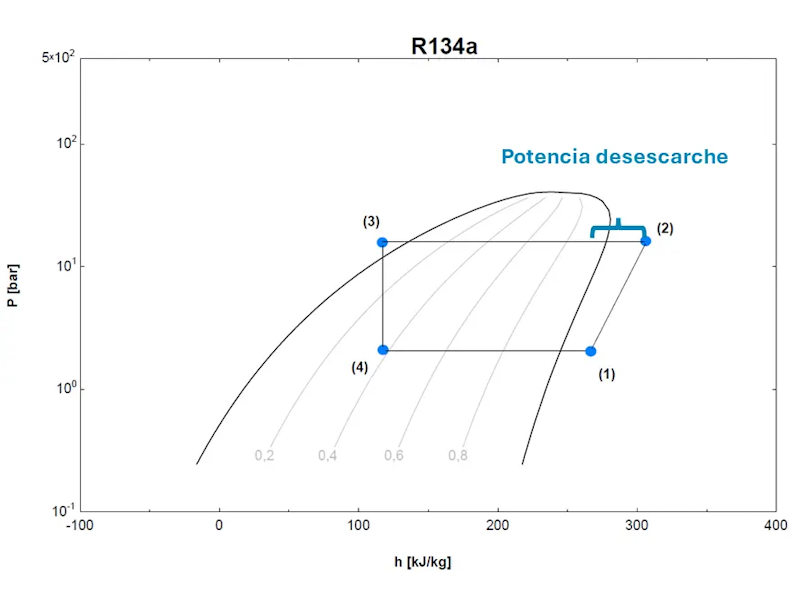
This method is particularly useful in refrigeration plants that require frequent and efficient defrosting, offering a simple but effective system where the heat generated and the cold are at the same point.
Defrosting by hot glycol
This method uses a heated glycol solution pumped through coils inside the evaporator to melt the accumulated ice. The process begins with opening the glycol solenoid valve and activating the hydraulic unit pump, allowing the hot glycol to flow directly into the evaporator.
During defrosting, the hot glycol runs through a separate circuit in the evaporator, efficiently transferring its heat to the ice and facilitating its rapid and complete melting. This method is especially valued for its ability to precisely control the defrosting process without increasing ambient humidity.
Once the target temperature is reached or the programmed time is met, the defrosting process is complete. The glycol is collected and returned to the buffer tank for reuse.
Defrost due to cycle reversal
Cycle reversal defrosting takes advantage of the reversibility of cooling systems. It converts the evaporator into a condenser and vice versa to melt the frost quickly. During this process, the chamber fan stops. The 4-way valve changes the direction of the refrigerant to the evaporator, which acts as a condenser. The coolant transfers heat to the accumulated ice and effectively melts it.
Once defrosting is complete, the cycle continues with the coolant in liquid form. This passes through the filter and the thermostatic expansion valve to the condenser, which now functions as an evaporator. Thus, the cycle is completed.